



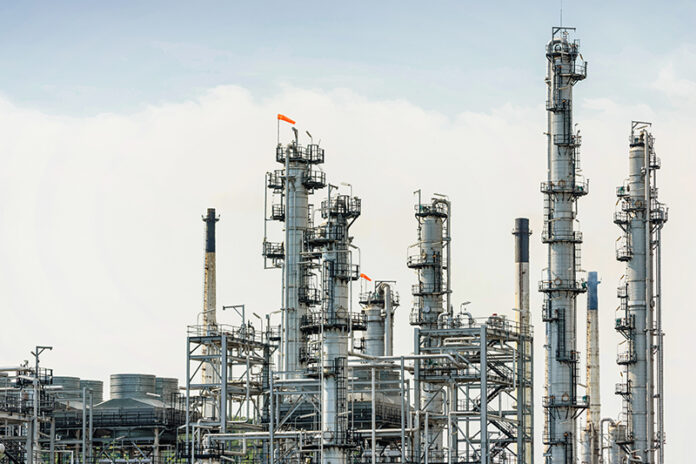
In the sprawling industrial landscape of Karachi, Pakistan’s largest refineries stand as monuments to both the country’s industrial ambitions and its policy paralysis. These facilities, designed decades ago to process crude oil into the fuels that power the nation’s economy, now face an existential crisis that threatens Pakistan’s energy security and economic stability.
Pakistan imports 70% of its petrol and 30% of its diesel, draining precious foreign exchange reserves at a time when every dollar counts. Meanwhile, domestic refineries operate at just around two-thirds of capacity, producing outdated Euro II and Euro III standard fuels while the world moves toward cleaner alternatives. This is not merely an industrial challenge, it’s a national crisis playing out in slow motion.
The anatomy of Pakistan’s refining sector
Pakistan’s refining sector comprises five major players with a combined capacity of 20 million metric tons annually. PARCO leads with 44% market share, followed by Pakistan Refinery Limited, National Refinery, Attock Refinery, and Cnergyico. Together, they employ thousands and represent billions in industrial infrastructure. Yet despite this capacity, the sector’s financial health has deteriorated dramatically, gross margins crashed from 5.9% to just 2.2% in FY25, while net profits plummeted 84% year-on-year.
The root of the problem lies in obsolete technology. Most Pakistani refineries operate on decades-old infrastructure that urgently requires modernization. Except for Cnergyico and PARCO, most facilities lack the capability to fully convert naphtha into Motor Spirit, resulting in inefficiencies, lower yields, and continued dependence on imports. These refineries are essentially “hydro-skimming” facilities, the petroleum equivalent of using a typewriter in the age of computers. They lack the sophisticated cracking and coking units that modern refineries use to convert heavy residues into valuable products. Consequently, Pakistani refineries produce excessive furnace oil (24% of output) that nobody wants, while the country imports the high-quality diesel and petrol it desperately needs. The content in this publication is expensive to produce. But unlike other journalistic outfits, business publications have to cover the very organizations that directly give them advertisements. Hence, this large source of revenue, which is the lifeblood of other media houses, is severely compromised on account of Profit’s no-compromise policy when it comes to our reporting. No wonder, Profit has lost multiple ad deals, worth tens of millions of rupees, due to stories that held big businesses to account. Hence, for our work to continue unfettered, it must be supported by discerning readers who know the value of quality business journalism, not just for the economy but for the society as a whole.To read the full article, subscribe and support independent business journalism in Pakistan