


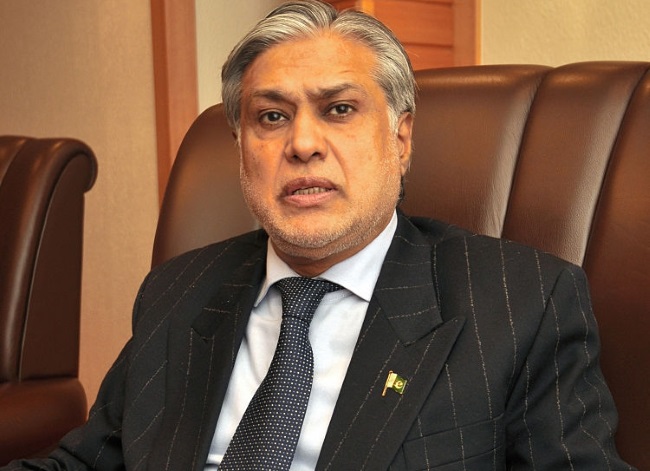
Deputy Prime Minister Ishaq Dar on Wednesday said International Monetary Fund programmes are generally anti-growth, as the government signalled a policy shift from prolonged economic stabilisation toward expanding output and job creation.
Speaking at the Pakistan Policy Dialogue, Dar said the government had achieved macroeconomic stability and would now focus on growth, while continuing to engage with the IMF. He said employment generation was not possible without higher growth and added that Prime Minister Shehbaz Sharif would prioritise economic expansion for the remainder of his tenure.
Dar said discussions with the prime minister had concluded that growth below 2.6% effectively translated into negative growth, given Pakistan’s annual population increase of around 2.6%. He reiterated that IMF-supported programmes typically constrain growth and stressed the need to rebalance policy priorities.
Finance Minister Muhammad Aurangzeb, speaking at the same event, said Pakistan could not sustain development with current population growth and underlined the need to bring the rate down. He said the government now viewed sustainable growth as the correct path forward.
The remarks highlighted differing views within the government, with some policymakers continuing to argue for caution after stabilisation, while others see limited room for further restraint given high unemployment, rising poverty and weak investment.
Former finance secretary Younus Dagha said stabilisation policies had resulted in record unemployment, increased poverty, a sharp rise in the tax burden on salaried individuals, stalled investment and capital flight. He criticised monetary tightening, arguing inflation had eased largely due to falling global commodity prices rather than high interest rates.
Dar said the policy rate had risen from 5.25% in 2017 to 22%, pushing annual debt servicing costs from under Rs2 trillion to about Rs10 trillion. Aurangzeb said interest expenses in the current fiscal year were projected to be Rs850 billion lower than initially budgeted.
Planning Minister Ahsan Iqbal said Pakistan could reach 6% growth quickly but warned that without structural reforms, such expansion could trigger a balance-of-payments crisis within two years. Dar said the government was not aiming for immediate acceleration to that level and expected growth to build gradually over two to three years.
On privatisation, Dar said bidding for Pakistan International Airlines was expected to reach Rs150 billion. The government has sold a 75% stake for Rs135 billion, with Rs10 billion in cash and Rs125 billion earmarked for investment in the airline. As chairman of the Cabinet Committee on Privatisation, he said the next phase would focus on privatising power distribution companies.
Dar said the external sector remained a challenge but urged patience, adding that a committee under his leadership was already working on a plan to raise exports to $60 billion within three years. He said Pakistan could add $10 billion each in goods exports and services exports and raise remittances to $110 billion over four years.
Prime Minister’s Adviser on Privatisation Muhammad Ali said higher and sustainable growth would require greater participation of women, formalisation of the informal economy and a shift from trading toward manufacturing.
Climate Change Minister Musaddiq Malik said Pakistan’s resources remained concentrated in the hands of a small group, calling for structural reforms to ensure broader economic inclusion.