


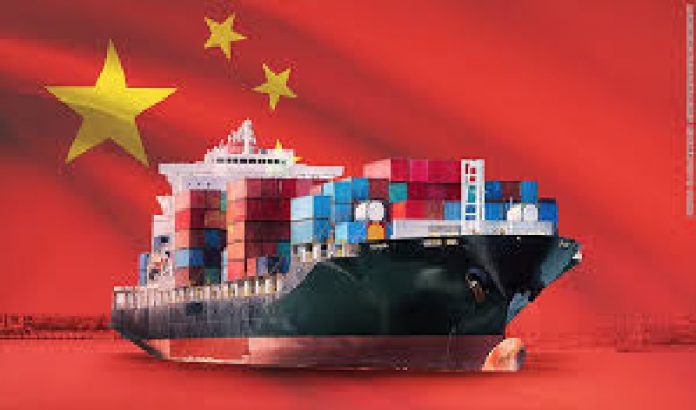
But Beijing also said it was willing to restart trade negotiations with the United States if the talks are “based on mutual respect and equality,” Xinhua said, citing a white paper on the trade dispute published by China’s State Council.
U.S. tariffs on $200 billion worth of Chinese goods and retaliatory tariffs by Beijing on $60 billion worth of U.S. products took effect at midday in Asia, though the initial level of the duties was not as high as earlier feared. The two countries have already slapped tariffs on $50 billion worth of each other’s goods earlier this year.
Chinese products hit with new U.S. duties include vacuum cleaners to internet-connected devices, while U.S. goods targeted by Beijing include liquefied natural gas and certain types of aircraft.
Though a senior White House official last week said the United States will continue to engage China for a “positive way forward,” neither side has signaled a willingness to compromise.
The U.S. official said on Friday there was no date set for the next round of talks. The Wall Street Journal reported that China, which has accused Washington of being insincere in trade negotiations, has decided not to send Vice Premier Liu He to Washington this week.
Economists warn that a protracted dispute will eventually stunt growth not just in the U.S. and China but across the broader global economy.
The trade tensions have also cast a pall over broader relations between Beijing and Washington, with the two sides butting heads on a growing number of issues.
China summoned the U.S. ambassador in Beijing and postponed joint military talks in protest against a U.S. decision to sanction a Chinese military agency and its director for buying Russian fighter jets and a surface-to-air missile system.
Trade talks in Washington last month produced no meaningful progress.
“It would look weak both to the U.S. and at home,” he said, adding that there is “sufficient stimulus in the pipeline” to limit the damage of the latest tariffs on China’s growth.
“The U.S.-China trade war has no clear end in sight.”
China may also be waiting for U.S. mid-term elections early next month for any hints of changes in Washington’s policy stance, Carnell added.
“With generic polls favoring the Democrats, they may feel that the trade environment will be less hostile after November 6.”
The U.S. administration will levy tariffs of 10 percent on the $200 billion of Chinese products, with the tariffs to go up to 25 percent by the end of 2018.
Beijing set its new levies on $60 billion of U.S. goods at 5 and 10 percent and warned it would respond to any rise in U.S. tariffs on Chinese products accordingly.
U.S. President Donald Trump on Saturday reiterated a threat to impose further tariffs on Chinese goods should Beijing retaliate, in line with his previous comments signaling that Washington may move to impose tariffs on virtually all imported Chinese goods if the administration does not get its way.
China imports far less from the United States, making a dollar-for-dollar match on any new U.S. tariffs impossible.
Instead, it has warned of “qualitative” measures to retaliate.
Though Beijing has not revealed what such steps might be, business executives and analysts say China could withhold exports of certain products to the U.S. or create a more administrative red tape for American companies.
Some analysts say there is also a risk that China could allow its yuan currency to weaken again to cushion the blow to its exporters.