UN chief pushes for debt moratorium, more aid to poor nations

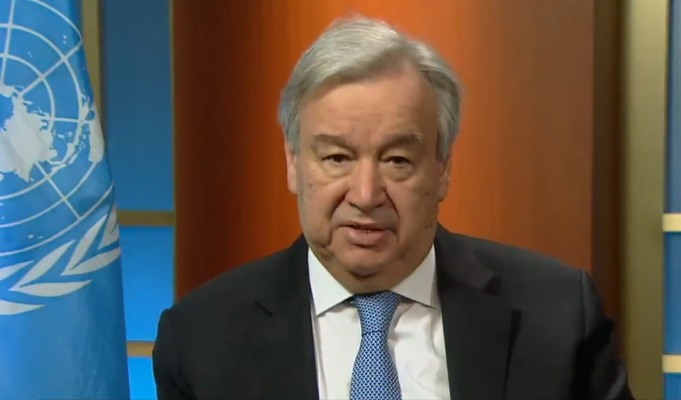
UNITED NATIONS: UN Secretary General Antonio Guterres has reinforced calls for debt moratorium to help developing countries combat coronavirus pandemic that has had a devastating effect on their economies.
“The debt moratorium must be extended to all developing countries that are unable to service their debt, including several middle-income countries…followed by targeted debt relief…to prevent defaults leading to prolonged financial and economic crises”, he told a virtual news conference on Thursday.
“The International Labour Organisation (ILO) reported this week that the global workforce will be hit with the equivalent of the loss of more than 300 million jobs,” the UN chief said, adding that millions of children risk missing life-saving vaccines and that those officially living in poverty could rise by around 500 million – “the first increase in three decades”. Underscoring the “massive and urgent support” needed for developing countries, he echoed his call for a worldwide relief package of at least 10 percent of the global economy’s output.
He acknowledged steps taken by the International Monetary Fund (IMF) – $12.3 billion in emergency financing; the World Bank, with $160 billion of extra financing; and the G20 leading economies, which have agreed to suspend debt service payments for the poorest countries, but added, “even this is not enough”.
Guterres maintained that a smart recovery from COVID-19 would help steer the world onto a “safer, healthier, more sustainable and inclusive path”, but that it was “critical to address the fragilities”. The secretary general called on governments to ensure that revitalised spending “accelerate the decarbonisation of all aspects of our economy and privilege the creation of green jobs”.
He also stressed that taxpayers’ money should not be used to subsidise fossil fuels or bail out carbon-intensive industries; a price should be placed on carbon; and public funds be invested in a future where financial institutions and investors take climate risks fully into account.
“Our template remains the Sustainable Development Goals (SDGs) and Paris Agreement on climate change”, the UN chief said. Guterres also recalled his global ceasefire appeal in March to face together the common enemy of COVID-19.
“The cease-fire call has resonated widely”, he told journalists, however, as mistrust is challenging implementation, his envoys are “working tirelessly…to turn expressed intentions into effective cease-fires”. The Idlib cease-fire is holding in Syria, “but we are still hopeful for a country-wide end to hostilities”, he said, adding that the UN is pushing in Afghanistan for a humanitarian ceasefire between the government and Taliban fighters. And although fighting in Libya has escalated, declarations made yesterday present “a glimpse of hope that a cessation of hostilities remains possible”.
“I believe there is an opportunity for peace in Yemen”, upheld Guterres, citing that all parties supported his appeal. Saudi Arabia has declared a temporary unilateral cease-fire, with the UN engaging with all actors to make it permanent, to restart the political process towards lasting peace. Pointing out that the first two COVID-19 deaths were registered there on Wednesday, he said, “it is time to recognize that the Yemeni people have suffered too much”.
“All our efforts depend on strong political backing”, stressed the UN chief, sharing his hope the Security Council would be able to “find unity and adopt decisions that can help to make ceasefires meaningful and real”.
Comments
No comments yet. Be the first to join the discussion!