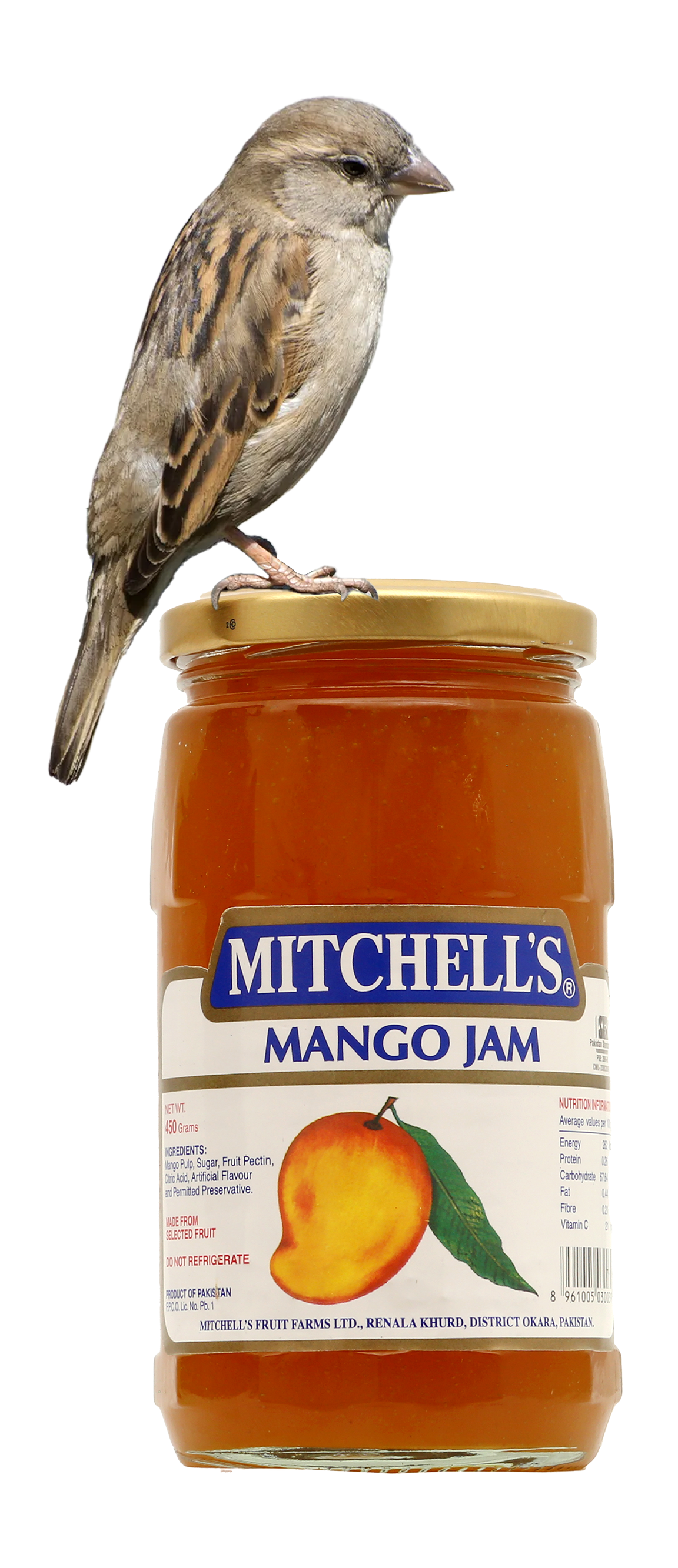
We here at Profit have been following the story of Mitchell’s very closely since 2019. Why would we not? It is a grand old Pakistani company, its products have made it a household name, it is owned by one of the most prominent business families in the country, and is currently headed by one of the most recognisable individuals in Pakistan: Najam Sethi.
Since at least 2019 it has been up for sale. The Mohsin family, which owns Mitchell’s and is part of the extended family of Syed Babar Ali and Syed Wajid Ali, decided to sell the company after running it for more than 70 years. A titan in its heyday, Mitchell’s could not keep up with technological advances and (more importantly) stiffer competition. It suffered a series of losses and the family decided it was time to make the most of their assets and hand Mitchell’s over to someone else.
But it didn’t quite go according to plan. Despite finding a buyer, the Covid-19 pandemic derailed the deal catapulting Mitchell’s into a five year period where it wasn’t clear whether they were after a turnaround or looking for another buyer. Central to all of this has been Najam Sethi. The former journalist who has served both as caretaker chief minister and as PCB chairman (both caretaker and official) is the son-in-law of S M Mohsin, the original patriarch that was running Mitchell’s.
Despite the five years that it has taken, Mitchell’s now has a buyer once again. Which is why it might be a good time to look back at how this time went, and how Sethi managed to bring the company back on the table. And more importantly, what comes next? [restrict level=1]
An English beginning
The grounds of Pilmour Links in St. Andrews, Fife. Situated on the picture perfect plains of the Scottish East Coast. The esteemed old golf course dates back its history to the 15th century. Quite possibly the place where the game was invented.
An overcast day with winds gusting from the sea. A lone man stands analyzing his next shot overlooking the lush greens and stoic, stone buildings dotting the scenery around him. It will be a rainy day for this man, both literally and figuratively. As he looks to take his next shot on the green of the 9th hole, he sees a man from the golf club approach him.
In his hands is an urgent telegram that will change the course of his life and the history of a village situated 9,000 kilometers away in India. In a moment, the man went from being on top of the world to having lost all his money. At a tender age of 60, many would have given up to their fate. Francis J Mitchell had other ideas. Having to feed three children, he sought to go to India to create a new fortune for himself.

His plan was to go to a small town situated in the Okara District and try to grow his own fruits on a 720 acre piece of land. The village of Renala Khurd was known as a rest stop used by Akbar and Saleem to Dipalpur on their way to pay homage to the Saint Hazrat Farid Ganj Shakar in 1578. The village was then overtaken by the British in 1849 and through irrigation measures, the barren land was turned fertile where there had been no access to underground sweet water.
When Mitchell came looking for the land, he had to lease it from the Punjab government where he would set up Mitchell’s Fruit Farms with the help of his sons, Leonard and Richard. Initially, there was a focus to grow vine fruits which were not very successful. Due to this, he turned to the idiom that when life gives you failures, make lemons. From that day on, he switched to growing citrus fruits and never looked back.
This led to the establishment of the Indian Mildura Fruit Farms Limited in 1933 which was involved in processing citrus fruits and selling concentrated squashes and preserves. The outbreak of war in 1945 led to demand for canned fruits and vegetables which saw a new factory being set up under the name of Kissan Fruit Products in Bangalore to meet this demand.
After the partition of 1947, the company changed its name and became Mitchell’s as a Pakistani company. While the company was seeing success, it saw the sad demise of its original owner Francis in 1933 and then his son Leonard in 1948. The company came under the purview of Richard Mitchell who ended up becoming its Chairman and Managing Director.
But this was a time when former English businessmen that had stuck around in both India and Pakistan were feeling a bit out of place. They no longer had their Gymkhanas and social events or a bureaucracy and army with their peers. It was time to go. Which is why in 1958, Mitchell’s was sold to a Pakistani. His name was Syed Maratib Ali. He was the father of two men that would go on to become the most prominent businessmen in Pakistan: Syed Babar Ali and Syed Wajid Ali. But Syed Maratib also had a daughter. And Mitchell’s was bought in order to settle her husband: S M Mohsin.
Under the new ownership, the company expanded into the confectionery market which boosted its sales. The company also looked to upgrade its equipment and machinery at regular intervals in order to keep improving the quality and cost efficiency of its factory. Today, the company is one of the largest employers of the village which has fully integrated operations in growing and processing its produce. The company is currently involved in manufacturing packages of fruits and vegetables, sauces, pickles, jams, squashes and fruit drinks in addition to confectionaries of a diverse variety.
Sale and losses running parallel
The story of Mitchell’s has been covered by this publication before. It is a story of a company that saw great highs, went public, and in 2008 attempted a major revamp. You can read more about it in Profit’s previous coverage.
Read More: Mitchell’s: Can a new management save an old company?
What we are interested in currently is the past decade. From 2013 onwards, the company stagnated. From 2016 onwards it lost money every single year, losing a combined Rs513 million up until 2020. All conversation regarding the company either revolved around the sale of the company or its constant dip in performance. Before 2016, it was difficult to imagine that a company like Mitchell’s could suffer losses. From 2009 to 2015, the equity of the company had grown from Rs 27 crores to Rs 58 crores.
Most of this value was owing to the fact that Mitchell’s was consistently churning profits on a yearly basis. From 2016 to 2023, things started to take a turn for the worst as the company ended up with cumulative losses of Rs 1.1 billion.

By 2020, the equity of the company had shrunk from Rs 58 crores in 2015 to just 7 crores and drastic measures had to be taken. The losses had racked up to such an extent that more equity had to be invested in order to help the company stay afloat.
While the financial performance was suffering, the majority shareholders at the company were looking to divest their investment. There was an active pursuit to find a buyer interested in taking control of Mitchell’s. Seeing the interest in the company, the share price started to rally from a low of Rs 195 in October 2019 to a high of almost Rs 345 in January of 2020. This was an increase of almost 77% in the stock price as there were expectations that the transaction would go through.
The sale could not go through due to the pandemic and the offer that was made by Bioexyte failed to materialize based on external pressures.
Even after the deal broke down, the fresh injection of equity meant that the stock price reached Rs 545 by November of 2020 which was testament to the new management being brought in which could make Mitchell’s profitable.
The jump in the stock price with little to no justification in terms of its financial performance pointed towards a takeover which could potentially unlock value at the company that had mostly been left unexplored.
When the company was purchased by Syed Maratib Ali, it was given to his son-in-law S M Mohsin who was able to grow the company with the help of his son, Mehdi Mohsin. S M Mohsin was the Managing Director while Mehdi was the Executive Director until he was appointed CEO in 2003, a position he held until 2009. Once he took a back seat and became a director, the company was handed over to professional management which continued the profitable trajectory until 2015. After this, they started to see losses. Looking to stall this slide, there was a search for new solutions.
This led to Najam Sethi being brought into the company in 2020.
To an outsider, it might seem like a choice being considered from the left field. Sethi is known as being a gap filler for different occasions. Caretaker Chief Minister, Pakistan Cricket Board Chairman, Journalist and Publisher. A smaller claim to fame is the fact that he is the husband of Syeda Maimanat Mohsin who is also known as Jugnu Mohsin in the upper crust of the society. Jugnu Mohsin is one of the daughters of S M Mohsin and owns more than 20% of Mitchell’s. Sethi was chosen as a person who could steady the ship and make the company profitable again.
Over a period of five years, Sethi went from being a chairman to the board of directors and later got appointed as the CEO of the company as well.
Analyzing the Sethi tenure
Even though Sethi became part of the board in 2018, his real term starts off in 2020 when he was made the Chairman of the board itself. The context of the company is important to understand at that point of time. The Bioexeyte sale had fallen through. Mitchell’s was experiencing losses and a depleting equity situation. Rather than taking the helm of the company, Sethi chose to become the head of the board while appointing a new CEO.
Before Sethi came in, the company was earning average gross profit margins of 22% from 2009 to 2020. In 2022, the margin had fallen to 8% only which rebounded back to 30% by 2024. Similarly, operating margin averaged 4% from 2009 to 2020 and was hovering at -22% in 2022. In 2024, this ratio increased to 22%. In terms of the net margin, it was in the positive region at 4% from 2009 to 2015 when profits were being earned. By 2020, these had fallen to -2.6% and further deteriorated to -25% in 2022. In 2024, this ratio had returned back to 17%.
While the management change was being carried out, the company also received a fresh injection of equity in the form of right share investment. This was able to add equity of Rs 15 crores into the company which was further supplemented by loans from sponsors which was used to fund working demands. This was a vote of confidence which was being shown in the new management.

The situation improved slightly in 2021 as net profits of Rs 1 crores were earned, however, things got worse in 2022 when losses of Rs 62 crores were seen in 2022 which was the biggest loss in its history. The appointment of Naila Bhatti as the CEO should have kicked off a new period of improved performance for the company. This, however, did not take place as historic losses of Rs 62.2 crores were suffered in 2022.
With a lack of a substantial turnaround, Sethi resigned as the Chairman and became the new CEO. By 2023, losses were still being seen with the year closing out with a further loss of Rs 6 crores.
Then came 2024 and the company became profitable yet again. 2024 ended with Mitchell’s finally earning a profit of Rs 46 crores which it had not seen in its history. In October of 2024 when the financial statements were released, it was seen that part of the profits could be attributed to Sethi and his management.
Having said this, a large portion of the profit was down to the sale of assets that was being carried out. This sale was primarily responsible for the profits. 2025 was going to have more importance as it had to be seen whether the profits could be sustained or they were going to revert back to losses. Based on the release of the 9 month performance, it can be said with much more authority that the Emperor is not wearing any clothes.
The analysis of 2024 and 2025 shows that much more is needed to turn the company around going forward.
Putting the 2024 performance in context
There is no doubt that Mitchell’s was able to show better performance in 2024. Considering that losses of Rs 62.2 crores are being suffered in 2022 and Rs 6 crores in 2023, the profits of Rs 46 crores do seem like a huge turnaround on the face of it. In terms of the management being successful, it was seen that the cost of sales decreased leading to better gross profits being seen in 2024. Even with similar sales, the company saw its gross profits increase from Rs 64.8 crores to Rs 79 crores.
On the other hand, Mitchell’s was recognizing many elements as part of its other income which included Rs 37 crores it added gain on the sales of non core assets. These were profits that were not under the control of the management and were able to increase the profitability of Mitchell’s for 2024.
This was the breakdown of the profits that had been seen by the company which could be partially attributed to the management while a major chunk was due to the sale of non core assets which added to the revenues of the company. The release of its latest accounts shows that in essence the performance of the company is still on the downward slope with the profits of 2024 being an exception rather than the rule going forward.
The nine month performance of the most recent year shows that the profits of the past year are slowly dissipating away. Mitchell’s earned revenues of Rs 2 billion last year and revenues stayed similar in the recent year as well. Gross profit margins also retained a similar 29% for both the years as well. One of the biggest differences was the increase in distribution and marketing expenses as it saw Rs 29 crores in 2025 while it was Rs 23 crores a year before. In addition to that, other income for 2024 was Rs 3.1 crores which decreased to Rs 1.7 crores this year. The collective impact of this was that profits fell by Rs 8 crores compared to last year.
The company’s saving grace was that the finance costs decreased from Rs 8 crores to Rs 6 crores which pulled back some of the profit but the magnitude of the increase in costs was too much to allow the company to retain profits like last year.
The result of this was that the company saw its net profits fall from Rs 14 crores in 2024 to only Rs 4.3 crores in 2025. Earning per share fell from Rs 6.12 to Rs 1.9 only. As the revenues and gross profits were similar, it shows that the management was able to repeat the performance of the past. In terms of distribution expenses, however, the costs increased by almost 30% which shows that it carried out more expenses to stimulate its sales. This coupled with a fall in other income meant that it was not able to sustain its profits.
In terms of performance by Sethi, it shows that the performance in 2024 was itself an outlier which could not be matched in 2025. Even the performance in 2024 was mostly down to sales of assets which was not seen in 2025 as well. All in all, 2024 was an aberration which was caused by circumstances rather than being attributable to him. As the year will end, the real magnitude of his performance would be revealed in its totality. What was a suspicion in 2024 is becoming a certainty in 2025. Sethi did not lead to renaissance as he was expected to.
Yes, he did reduce the losses and might even show a profit in 2025 but it is still far from the profits that were being earned before 2014 when annual profits of Rs 10 crores was standard. There is still much left to be desired in terms of actual results.
A buyer again
With that being said, it has emerged recently that Sethi has been able to conjure up a buyer for Mitchell’s. Something that was being contemplated three years ago has finally come to fruition. When the deal fell through in 2020, there was little chance that a new buyer would be interested. In order to show the value locked in the company, Sethi was brought on and set about trying to turn the company profitable to get viable bids.
Even in the face of devastating results, there was a sense that things could be turned around and active efforts were made to make that possible. Now it seems that all the efforts have yielded a result. In November 2024, two of the major shareholders namely Syeda Maimanat Mohsin and Syeda Matanat Ghaffar announced that they were interested in selling their collective holding of 40.63% shares by divesting their entire stake in the company. Going back 6 months and the release of the profitable accounts, this seemed like a good strategy to capitalize and sell the stake.
In line with this, the first company to approach was CCL Holdings Limited which is a pharmaceutical company willing to buy the shares. Soon thereafter, IGI Holding company also showed an interest. IGI already owned 3.72% of the shares and would be taking the total shareholding to 44.35%. Both these companies would be buying the shares of the two major shareholders and then would have to carry out a public offer to buy half of the remaining shares. This would mean that either of the bidders would end up controlling more than 50% of the company which would give the control of the company to the new shareholders.
With new shareholders, the first move would be an election of new directors which would then appoint a CEO of their choice. For all intents and purposes, the sale would be the last high profile decision that the board will take as the new board will lead to replacements at the top.
For now, one thing is certain that CCL Holdings and the shareholders have agreed to a sale purchase agreement as on 14th of May 2025 which will entail the sale of 40.63% of the shares. The deal has been agreed to and details will start trickling in after regulatory approvals are given. Once the deal is finalized, CCL Holdings will have to make a public offer for an additional 29.69% which will potentially reach more than 70% of the total shareholding.
At the end, it can be said that Mitchell’s wanted to either sell a part of their shareholding or bring back its glory days. After continued efforts and failure, the senior management decided to change course and bring help from the outside. Sethi was tasked with either turning the company around or selling it. At least he has been successful in doing one of the tasks. The future of Mitchell’s is uncertain for now. Only after CCL Holdings take control and bring in its own management will it be seen whether the company has the ability to turn profitable or its issues are too far-reaching to be rectified. [/restrict]