


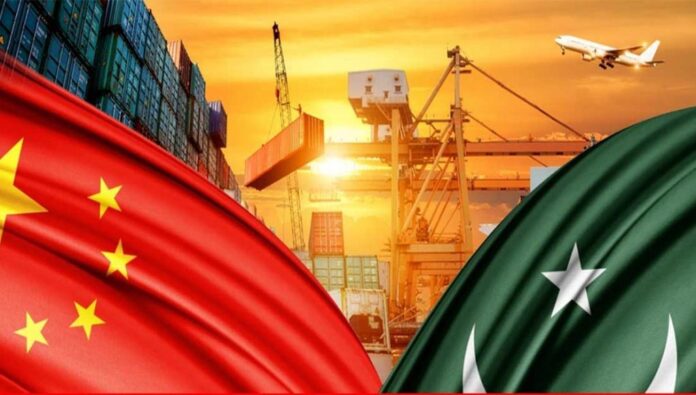
Pakistan’s Federal Minister for Planning, Development and Special Initiatives, Ahsan Iqbal, on Tuesday proposed a four-point regional cooperation framework, starting with a joint task force on connectivity built on harmonised transport routes, customs digitisation, single-window trading systems and coordinated border procedures, which could cut Eurasian logistics costs by up to 30%.
Addressing the Tian Shan Forum on Economic Cooperation in Central Asia via video link, the minister said that the region, home to 3.9 billion people, had become a major engine of global economic activity. He noted that economic power was shifting from the Atlantic to the Indo-Pacific and that China, Central Asia and South Asia were emerging as a new pole of global growth. He credited the Belt and Road Initiative (BRI) for reviving the historic Silk Road through modern transport networks, infrastructure investment and people-to-people engagement.
Discussing Pakistan’s role, he said the China-Pakistan Economic Corridor (CPEC) had evolved from an infrastructure programme into a long-term strategic development framework. He highlighted that CPEC had added 8,000MW to Pakistan’s national grid, built more than 1,000 kilometres of highways and motorways, operationalised Gwadar Port, initiated groundwork for special economic zones and laid the basis for cooperation in information technology and artificial intelligence.
Ahsan said Pakistan had shifted its strategic focus from geopolitics to geoeconomics and aimed to become a reliable connectivity hub linking China, Central Asia, South Asia and the Middle East. Gwadar, he noted, offered the shortest maritime route for Central Asian states and could cut transit time by up to 70 percent.
He outlined a four-point regional cooperation framework, starting with a joint task force on connectivity built on harmonised transport routes, customs digitisation, single-window trading systems and coordinated border procedures. He said such mechanisms could reduce logistics costs across Eurasia by up to 30 percent. He also proposed creating regional special economic zones jointly developed by Pakistan, China and Central Asian economies, estimating that these zones could generate $50–60 billion in industrial output within a decade.
Further proposals included an energy and clean-transition partnership focused on cross-border electricity trade, gas pipeline connectivity, renewable energy and critical minerals. A fourth proposal called for building a Digital Silk Road to expand cooperation in artificial intelligence, fintech, cybersecurity, e-commerce and smart agriculture.
Ahsan noted that regional challenges such as climate change, technological disruption and development gaps required coordinated action. He said global initiatives introduced by China’s leadership aligned with Pakistan’s vision for inclusive development.
He concluded by saying the region’s future would be shaped by decisions made collectively. “If we choose connectivity over isolation and cooperation over fragmentation, our region can emerge as the strategic economic centre of the world,” he said, adding that Pakistan remained committed to this direction.