


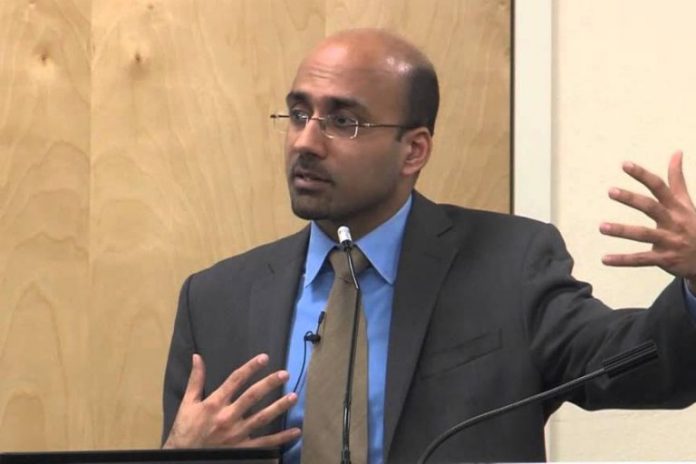
Pakistani-American economist Atif Mian, currently a professor of Economics at Princeton University, has called for a new economic vision for Pakistan, proposing a “Five-for-Fifty” (5/50) framework aimed at achieving 5% annual per capita income growth over the next 50 years. In a post on his website on Tuesday, Atif argued that this ambitious target would enable the average Pakistani to match the income levels of the average global citizen.
Atif believes the 5/50 vision is an attainable goal, pointing to the examples of South Korea and China, which once had income levels similar to Pakistan but have since made significant economic progress. He described the framework as “transformative,” suggesting that had Pakistan managed such growth over the last fifty years, it could have been among the world’s top ten economies, with a global standing comparable to France.
However, Atif noted that Pakistan’s economic performance over the past five decades has fallen far short of this goal. He highlighted a decline in growth, from a 3.1% per capita rate in the 1980s to near stagnation in recent years.
To achieve the 5/50 vision, Atif called for a “regime change” in Pakistan, not in political terms but in strategic policy. He emphasized that many countries fall into one of two distinct growth regimes: stagnation or sustained high growth. Pakistan, he argued, is currently trapped in a stagnation regime, where occasional bursts of high growth quickly fade.
Atif criticized the current IMF program, saying while it was necessary for liquidity support, it is poorly designed for sustained growth. He pointed out that the program’s tax hikes on electricity have made it one of the most expensive in the world, damaging long-term growth prospects.
The economist also criticized Pakistan’s approach to investment, suggesting that policymakers have repeatedly mistaken borrowed dollars for genuine growth-generating capital. He cited the poorly designed Strategic Investment Fund Corporation (SIFC) as one example of such misguided policies.
According to Atif, Pakistan needs a serious rethinking of its external-account policy, emphasizing that the country’s longstanding strategy of maintaining an overvalued exchange rate while encouraging unproductive foreign borrowing has failed.
To break free from the stagnation regime, Atif argued that Pakistan must invest in robust data infrastructure, independent research institutions, and competent decision-makers with real authority. He also called for courage in challenging entrenched interests and implementing bold, forward-thinking policies.
“Successful regime change requires courage,” Atif concluded, “the courage to break with entrenched, regressive special interests, and the courage to think and act differently.”