


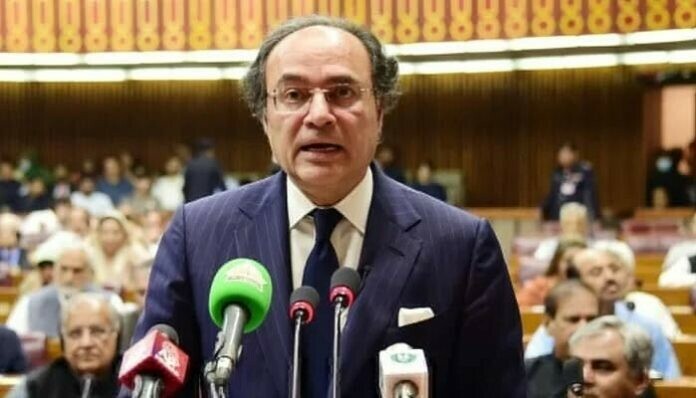
Federal Finance Minister Senator Muhammad Aurangzeb on Saturday said sustained engagement with the business community beyond the annual budget cycle was essential to address Pakistan’s structural economic challenges.
Addressing the All Pakistan Chambers Conference organised by the Lahore Chamber of Commerce and Industry, he said only the private sector could drive economic growth, while the government’s role was to ensure a stable and enabling environment.
Aurangzeb said the State Bank of Pakistan had received $1.2 billion following approval of the International Monetary Fund programme. He said large scale manufacturing posted growth of 4 percent, information technology exports had crossed $4 billion, and remittances were projected at $41 to $42 billion.
He said remittances remained the backbone of the economy and noted efforts to deepen the local bond market and deregulate commodity markets. He also announced that the Pakistan Agricultural Storage and Services Corporation would be abolished, with strategic reserves to be managed through the private sector.
The finance minister said the Tax Policy Office had been separated from the Federal Board of Revenue and placed under the Finance Division to ensure long term and consistent tax policy. He also referred to steps related to crypto, blockchain and the digital economy.
Aurangzeb invited the private sector to participate in the privatisation of Pakistan International Airlines and proposed the establishment of a research cell at the Lahore Chamber.
He said constructive discussions between the federation and provinces on the National Finance Commission Award had led to the formation of eight working groups, with progress expected by January 15.
He said the IMF diagnostic and corruption report was the outcome of a transparency process initiated by the government itself and was not aimed at any specific administration. He said an action plan was being prepared to address the structural weaknesses identified in the report.
Earlier, LCCI President Faheemur Rehman Saigol said the cost of doing business had become unsustainable due to high policy rates and expensive electricity and gas, forcing industries to consider relocating abroad.
He called for forensic audits of agreements with independent power producers and urged that electricity tariffs be aligned with those of regional countries. He also demanded a simple and transparent tax system, incentives for non filers to join the tax net, and the abolition of unnecessary withholding taxes.
Saigol said exports could only grow with the restoration of the Final Tax Regime and timely payment of duty refunds. He said state owned enterprises were incurring annual losses of around Rs850 billion and called for their immediate privatisation. He added that investment levels were at a 25 year low and stressed the need to promote domestic investment.
SAARC Chamber Vice President Mian Anjum Nisar said high electricity prices remained a fundamental concern for businesses.
LCCI Senior Vice President Tanveer Ahmed Sheikh said the FIR culture against traders must end, warning that investor insecurity would make it difficult to attract foreign investment.
Presidents of the Chambers of Chaman, Quetta and Sarhad urged the reopening of border trade, saying closures were hurting exports to Central Asian states.