


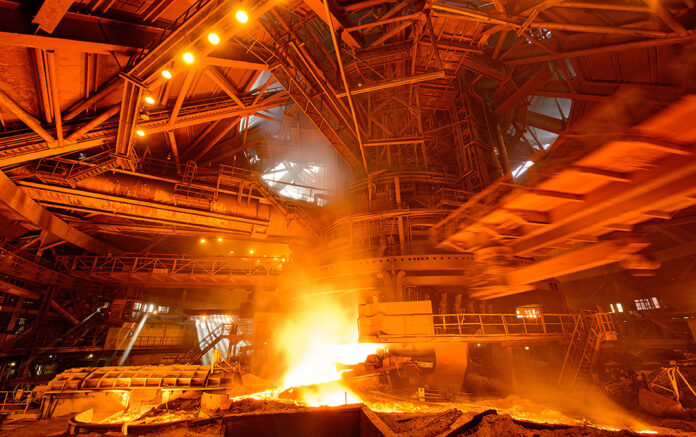
Pakistan and Russia have signed the second protocol under the Pakistan-Russia Inter-Government Commission (IGC) to advance the revival of Pakistan Steel Mills (PSM) and agreed to prepare a bankable Engineering, Procurement, and Construction (EPC) framework to take the process forward, Business Recorder reported, citing official sources.
The decision was taken during the 10th meeting of the IGC held in late November 2025, attended by senior officials from the Ministry of Industries and Production and representatives of the Russian government. The meeting agreed on preparing a bankable feasibility study for the revival of the loss-making steel mill.
The government has decided not to operate PSM and will proceed with its privatisation. Local and international steel companies will be facilitated to acquire the mill, and an expression of interest is expected to be issued in the coming weeks once the feasibility work is completed.
At Pakistan’s request, Russia has presented two technical options for reviving the mill. The first is based on a blast furnace model with an estimated cost of $1.91 billion, while the second proposes construction of a new facility using Electric Arc Furnace (EAF) technology at a cost of about $1.05 billion.
Pakistan has estimated iron ore reserves of around 1.887 billion tonnes, yet continues to import nearly $6 billion worth of iron, steel, and scrap annually. Officials said domestic steel production remains below demand, with the supply gap estimated at 3.1 million tonnes last year.
The Ministry of Industries and Production is also working with the Ministry of Maritime Affairs on a separate plan to revive PSM through a maritime-industrial partnership centred at Port Qasim.
Under the plan, the facility would be converted into a ship recycling and repair complex with a floating dock capable of handling Aframax-class vessels. Steel recovered from dismantled ships would either be supplied to PSM or processed at a nearby facility into industrial-grade steel.
Officials said the project could reduce steel imports by up to 20 percent, potentially saving more than $13 billion over the next decade. According to a World Bank report, Pakistan currently imports around $6 billion worth of steel annually, with demand projected to grow by nearly 6 percent per year through 2035.