


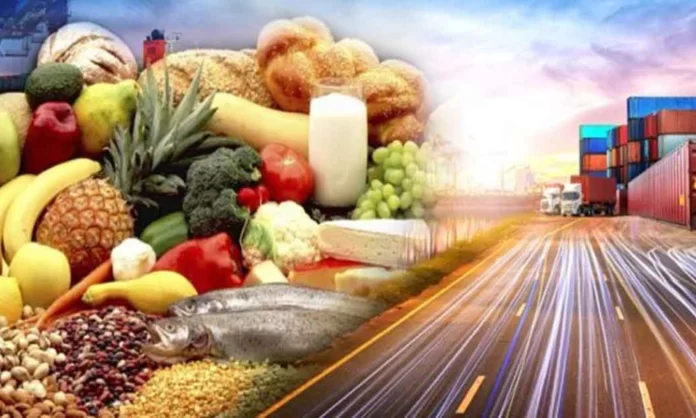
Federal Minister for National Food Security & Research, Rana Tanveer Hussain, highlighted key sectors with significant export potential, such as meat, livestock, and rice, revealing that Malaysia, Saudi Arabia, Iran, and other Gulf countries are ready to import Pakistani fresh meat and rice, while Tajikistan alone has expressed interest in importing nearly 100,000 tonnes of meat.
To capitalise on these opportunities, the food minister stressed the importance of aligning Pakistan’s production, processing, and regulatory systems with international standards.
This was discussed during a high-level interactive meeting with agricultural exporters and key stakeholders at the Federation of Pakistan Chambers of Commerce & Industry (FPCCI). The meeting was convened on the special instructions of Prime Minister Imran Khan to analyze the causes behind the recent dip in exports, particularly in the agriculture sector.
The session, led by FPCCI Vice President Tariq Jadon, was attended by exporters and stakeholders from various sectors, including agriculture, livestock, meat, rice, fruits, and vegetables. Acting FPCCI President Saqib Riaz welcomed the Federal Minister.
Minister Hussain discussed Pakistan’s recent successes in economic and political diplomacy, particularly regional engagement with India, but pointed out that the country’s exports still hover around $30–32 billion. He stressed the need for a fundamental shift toward an export-driven economic model to ensure long-term growth.
“Exports are the backbone of our economy,” said Minister Hussain, emphasizing that remittances, while valuable, are not sufficient to sustain economic growth. He advocated for empowering local farmers and domestic industries to strengthen the export sector rather than increasing dependence on imports.
Acting FPCCI President Saqib Riaz pointed out that exports offer significant growth potential without heavy reliance on imported inputs but noted challenges such as high tax rates, complex policies, and the conversion of agricultural land into housing schemes. He emphasized the need to protect agricultural land and limit its conversion to agriculture-based industries.
FPCCI Vice President Tariq Jadon raised concerns about the lack of balanced benefits from Free Trade Agreements (FTAs) with partner countries and the losses faced by exporters due to the closure of the Afghanistan border, which has disrupted regional trade.
Representatives from the Fruit and Vegetable Association voiced concerns over market access for key products like potatoes and kinnow, calling for improved logistics and supportive policies to enhance exports of these items.
In response, Minister Hussain assured exporters of the government’s support and directed FPCCI and stakeholders to prepare a consolidated list of challenges and recommendations. He announced that a follow-up meeting would be scheduled to address the issues raised and ensure effective implementation.
Hussain reaffirmed his commitment to resolving exporters’ concerns and aligning national policies to transform Pakistan into a competitive, export-oriented economy driven by agriculture, livestock, and value-added production.