January 14, 2026
Jaecoo J5 shakes up the SUV market; will it be able to fill the hybrid-affordability gap?
Affordable, feature-packed, and in high demand, Jaecoo J5 is reshaping expectations in Pakistan’s auto market
January 14, 2026
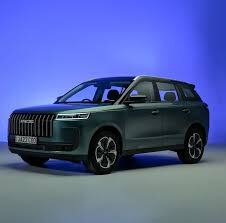
When Jaecoo first arrived in Pakistan with the J7, the market took note, but cautiously. Positioned as a higher-end PHEV with seven airbags, a 360-degree camera, and a cool box, the J7 was less about immediate disruption and more about establishing credibility. Backed by the Nishat Group, the move signaled that Jaecoo was serious, a brand with deep local support and the resources to maintain long-term operations in Pakistan.
But the true market earthquake didn’t come from the J7. That shockwave arrived quietly, then explosively, in the form of the J5.
Showroom Surge: Buyers Overwhelmed by Value
Across multiple Jaecoo showrooms in Lahore, the J5 has caused a near-constant stream of interest. Unlike typical launches, curiosity quickly converted into serious inquiries and confirmed bookings. Within minutes, several cars were being processed.
Interestingly, the Premium variant has drawn more attention than the Comfort, suggesting buyers are willing to pay extra for additional features rather than simply chasing the lowest price.
The J5 is resonating with buyers who had previously been priced out of hybrid SUV options and the delivery times March for Comfort, May for Premium are a reflection of its overwhelming demand. While competitors like Toyota and Honda, are offering quicker deliveries in some cases, Jaecoo’s timeline highlights that the craze is driven not by scarcity but by value perception.
Upon survey, it was revealed that many buyers upgrading to the J5 are coming from sedans or older SUVs. They are moving into a segment that has long been inaccessible due to high prices, poor availability, or both. The J5’s combination of affordability, hybrid technology, and export-grade quality makes it feel like a breakthrough in the compact SUV space. But is it really?
Credibility First, Disruption Second
Jaecoo’s strategy which now seems to be paying dividends is one to be studied. J7 established Jaecoo’s foothold in Pakistan’s higher-tier SUV market. With a slightly lower price than the Haval H6 PHEV (PKR 10.499M vs PKR 12.895M), comparable features, and hybrid technology, it demonstrated that Jaecoo could deliver quality and sophistication. Buyers could trust that the brand was serious, especially with Nishat Group backing a reassurance missing from earlier Chinese entrants.
But credibility was just the opening act. The J5 is the headliner. Aggressively priced at PKR 6.699M for Comfort and PKR 7.699M for Premium, it undercuts Haval’s Jolion HEV by more than PKR 2.5M, while remaining below most Japanese rivals, including Toyota Corolla Cross HEV (PKR 8.535–8.935M) and Honda HR-V e:HEV (PKR 8.999M). For many buyers, the J5 represents a value proposition previously unheard of in the hybrid SUV segment.
Filling the Market Gap
The J5 also addresses a long-standing void. Rising prices from Haval, combined with Japan’s premium hybrids, had priced many buyers out of the compact hybrid segment. The J5 made entry into this segment possible, offering features, space, and efficiency without breaking the bank.
Is it sustainable? Unlike MG, which initially launched with hype and aggressive pricing but later saw its momentum fade due to being fully CBU, Jaecoo’s CKD assembly in Pakistan positions it differently.
MG also entered the market on the back of aggressive pricing and a highly compelling product, so the obvious question is whether Jaecoo risks repeating that arc, early hype followed by fading traction.
That question was put directly to Jaecoo dealers and examined against the realities surrounding both launches. While MG today operates CKD assembly in Pakistan, its early volume models were introduced as fully imported CBUs, which is an entirely different game.
CBU dependence constrained parts availability, slowed dealer network depth, and strained customer relations, while parallel controversies around duties, taxation treatment, and recurring complaints linked to the HS compounded ownership concerns.
By the time MG transitioned toward CKD operations, its initial momentum had already crested and begun to unwind. Dealers argue Jaecoo’s strategy, local assembly from the outset backed by Nishat Group infrastructure, materially reduces the risk of a similar loss of traction, though the market will ultimately decide whether that promise holds.
CKD status allows better supply management, service networks, and customer support, giving buyers confidence that their investment won’t diminish through poor after-sales support or inconsistent availability.
However it is of equal importance to understand that Jaecoo Omoda will have to ensure the best possible aftersales in terms of servicing and parts to retain their newly won customers. Dealers consistently emphasize that Jaecoo’s combination of CKD production, Nishat Group backing, and export-quality standards separates it from MG’s early hype cycle and many other Chinese entrants that struggled to sustain interest. This, however, remains to be seen and only the test of time will determine the outcome.
Does Jaecoo highlight Haval’s vulnerability?
This brings into question another major Chinese player in the SUV segment. Haval, whose original value-for-money edge has eroded over time as prices increased.
Rising costs, slower delivery for popular variants, and incremental CKD expenses left a segment of price-conscious buyers exposed. Remember not too long ago Haval shook up KIA and Hyundai with lower prices and comparable if not better products.
The J5 similarly entered this vacuum with perfect timing, taking advantage of buyers’ dissatisfaction and offering an alternative that combines price, features, and credibility. Dealers describe it as a strategic, almost predatory move shark-like in its execution.
The contrast is stark: while competitors can still promise faster delivery for some models, it’s the J5’s combination of pricing and perceived value that is driving bookings and is sustaining hype. Buyers are not scrambling due to limited production; they are queuing because the offer represents unmatched bang for buck in a crowded segment.
Chinese vs Chinese: Strategic Positioning
Framing the competition Chinese-to-Chinese highlights Jaecoo’s strategy. The J5 undercuts the Haval Jolion HEV while offering hybrid efficiency, airbags, and cameras. The J7 competes directly with H6 HEV, slightly undercutting it in price while delivering comparable features and comfort. The approach is deliberate: J7 legitimizes the brand, J5 dominates the market conversation.
This positioning forces competitors to respond on multiple fronts. Haval faces a threat not just from Japanese hybrids like Corolla Cross and HR-V but from a newcomer attacking the same DNA it once dominated Chinese hybrid SUVs priced for the middle class. Jaecoo’s dual strategy creates tension, reshapes buyer expectations, and sets a new benchmark for value in the market. Very similar to what Haval did when it entered the market or what KIA and Hyundai did to Honda and Toyota so long ago.
The Nishat Group’s involvement adds another layer to it. It is more than a marketing footnote. It signals operational capability, confidence in after-sales service, and reliability in parts availability, critical factors in a market where early Chinese entrants often struggled. Buyers are willing to commit to Jaecoo in part because the conglomerate’s support reduces risk and reinforces trust in the brand’s long-term prospects.
Pricing Caution:
While Jaecoo’s entry has been fiery, Pakistan’s SUV market has shown that early pricing advantages can be fragile. Kia’s Sportage, Sorento, and Stonic disrupted segments with aggressive pricing but later fluctuated prices, affecting resale value and eroding initial buyer enthusiasm.
Jaecoo currently enjoys high demand and strong perceived value, but much of it is strictly price-dependent. Any abrupt price adjustments or trim changes could weaken the J5’s narrative. Maintaining supply, managing variants, and preserving affordability will be critical for sustaining momentum. So the question is will Jaecoo learn from Kia or will it fall prey to similar hungrier competitors as Kia has?
The Big Picture:
Jaecoo’s launch strategy J7 to establish credibility, J5 to disrupt the market has created a rare storm in Pakistan’s hybrid SUV segment. Buyers are moving from sedans and older SUVs, filling a market gap and redefining what is possible in terms of pricing, features, and access. Competitors, particularly Haval, now face the challenge of responding to a newcomer that combines timing, pricing, quality, and credibility with ruthless efficiency. Something they did to already established manufacturers previously.
The MG comparison is instructive: hype alone cannot sustain market dominance without supply management, after-sales support, and CKD advantages. Jaecoo has learned from these lessons, translating aggressive pricing into sustained market traction rather than a temporary spike in interest.
For now, the J5 has ignited not just Lahore’s but the entire Pakistan’s market, not just selling cars but reshaping buyer expectations, filling a neglected segment, and setting a benchmark for value in hybrid SUVs. The real test will be whether Jaecoo can sustain supply, pricing, and service quality over the next year or whether competitors will find ways to claw back the market share it has claimed. Either way, the J5 has already demonstrated that disruption is possible, and the SUV segment in Pakistan will never be quite the same again.
Editor’s Note: An earlier version of this story’s reference to MG appeared to some readers to suggest a lack of recognition of the company’s transition to CKD assembly. The article has since been updated for clarity, with additional context and a more detailed analysis of MG’s initial CBU-led market entry and how it differs from Jaecoo’s launch strategy.
1 Comment
No comments yet. Be the first to join the discussion!