



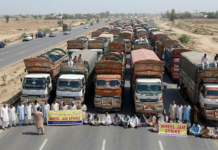












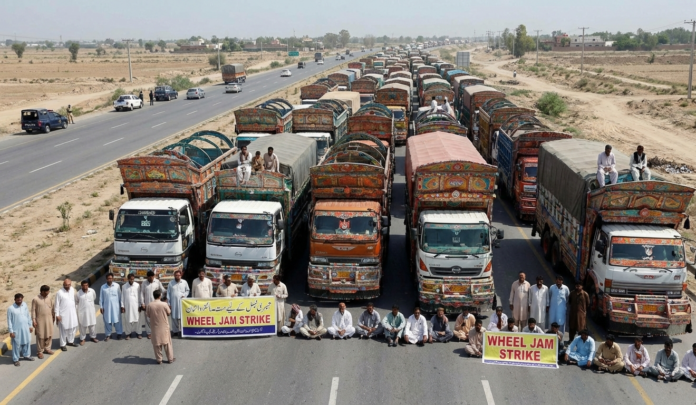
Pakistan’s ongoing nationwide strike by goods transporters has led to severe disruptions across multiple sectors, including industrial production, exports, and the supply of essential goods, including medicines.
As per reports, the strike, which entered its 10th day, has resulted in impacted port operations in Karachi, with thousands of export and import containers left stranded. The disruption has prompted industrialists to raise alarms over the economic fallout, warning of irreparable damage if the strike continues.
Exporters are now considering costly air consignments to meet delivery deadlines, while several hundred containers, already loaded on vessels, remain stranded at sea.
The Pakistan Hosiery Manufacturers and Exporters Association (PHMEA) described the ongoing halt in port activity as economic sabotage. The PHMEA emphasised that the strike has brought Pakistan’s supply chain to a standstill, endangering daily exports worth around $92 million, with the textile sector alone contributing $52 million daily.
Despite ongoing negotiations with the federal and provincial governments, goods transport unions have declared they will continue the strike until their demands are met. The transporters are protesting the implementation of stricter regulations under the Motor Vehicle Ordinance 2025, which imposes heavy fines, penalties, and vehicle impoundments.
In addition to industrial and trade disruptions, the strike has significantly impacted the availability of essential medicines across the country. Pharmaceutical manufacturers report that the lack of transport has resulted in shortages of critical medications, particularly in Balochistan, where 80% of medicines are sourced from Karachi. Chronic disease medicines, including those for diabetes, hypertension, and cardiovascular conditions, are in short supply.
The Pakistan Pharmaceutical Manufacturers Association (PPMA) representatives highlighted that factories are facing difficulties in dispatching medicines, leading to a backlog of products in warehouses. As the strike continues, stocks of life-saving drugs are dwindling, and patients, especially in remote areas, are struggling to find the medicines they need.
The Pakistan Chemists and Druggists Association also voiced concerns, urging the government to prioritise the transportation of essential medicines. The association emphasised the urgent need for action to ensure that pharmaceuticals reach medical stores and healthcare facilities across the country.