


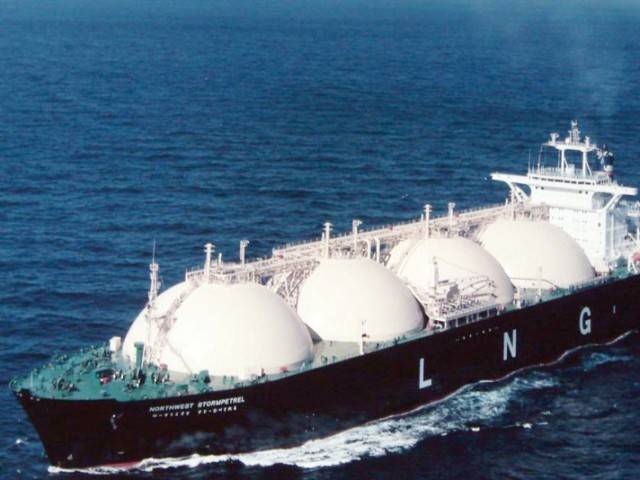
Pakistan will divert 35 liquefied natural gas (LNG) cargoes to international markets in 2026 under its annual delivery arrangements with Qatar and ENI, while continuing imports to meet peak winter demand, The News reported.
Under the 2026 Annual Delivery Plan, Pakistan will import 88 LNG cargoes. Of these, 24 term cargoes from Qatar will be diverted under the Net Proceeds Differential (NPD) clause. No diversions will take place in January or February due to high winter gas demand.
In January 2026, Pakistan will receive 12 cargoes — 11 from Qatar and one from ENI. In February, eight cargoes from Qatar will be imported, with no NPD diversions.
Diversions will begin in March and continue through December. Under the schedule, Qatar cargo diversions will include one in March, four in April, two in May, one in June, three in July, two in August, four in September, three in October, three in November and one in December. In addition, 11 ENI cargoes — one each month from February to December — will be diverted under a separate agreement with Pakistan LNG Limited.
In total, 35 LNG cargoes worth over $1 billion will be diverted in calendar year 2026. A further 10 ENI cargoes are planned for diversion in 2027.
Under the NPD clause, any profit from a Qatar cargo sold above Pakistan’s term price accrues to Qatar, while losses are borne by Pakistan State Oil. ENI cargoes are diverted under a negotiated settlement with Pakistan LNG Limited, under which profits and losses are shared.
Pakistan’s monthly LNG imports planned for 2026 are 12 cargoes in January, eight in February, eight in March, six in April, eight in May, eight in June, seven in July, seven in August, six in September, six in October, four in November and nine in December.
The government has decided it will not absorb any losses arising from LNG diversions. Any losses due to low international prices will be passed on to RLNG consumers, including RLNG-based power plants, export-oriented industries, the CNG sector and domestic RLNG users.
Despite the diversions, Pakistan is expected to have 13 surplus LNG cargoes in 2026 due to a decline of over 400 mmcfd in gas demand. Earlier estimates had projected 48 surplus cargoes. Based on an average term price of $30 million per cargo, the diversion plan is expected to save about $1.05 billion in foreign exchange.
Lower LNG inflows will allow restoration of indigenous gas supplies curtailed due to high line-pack pressure, enabling supply at around Rs1,000 per MMBTU compared with about Rs3,500 per MMBTU for RLNG. Gas curtailment is expected to fall from about 310 mmcfd to around 100 mmcfd next year.
Pakistan remains committed to importing 120 LNG cargoes annually — 108 from Qatar and 12 from ENI — despite weaker demand caused by slow GDP growth and high industrial input costs. Currently, the country imports about 10 cargoes per month, including nine from Qatar and one from ENI.
According to the Petroleum Division, the ENI–Pakistan LNG Limited arrangement is expected to generate $880–900 million in combined savings and profits between 2025 and 2027. In 2025, 11 ENI cargoes were diverted, saving $300 million and generating $45 million in shared profits. For 2026, another 11 diversions are expected to save $230 million and generate $45–50 million, while 10 diversions in 2027 are projected to yield $290–300 million.