


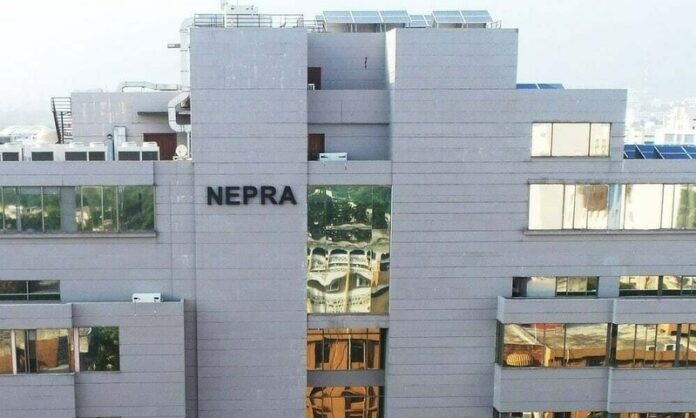
The National Electric Power Regulatory Authority (Nepra) has approved a uniform national average tariff for distribution companies (Discos) and K-Electric (KE) for the year 2026, despite strong opposition from the industrial and export sectors.
As per media reports, during a public hearing on the Federal Government’s motion for the tariff determination, industry representatives voiced concerns over a nearly Rs130 billion cross-subsidy burden imposed on industrial and export-oriented consumers. They warned that this financial strain has made industrial growth and exports unfeasible, particularly as the textile sector struggles to compete with cheaper imports, notably from China.
Nepra’s tariff determination for CY 2026 set the national average electricity tariff at Rs33.38 per kWh, a slight reduction from Rs34.00 per kWh in FY 2025-26.
The Power Division filed the motion for a uniform tariff, which will also apply to KE consumers, in line with the National Electricity Policy. However, the decision has drawn sharp criticism, especially after it was revealed that industrial consumers are paying Rs7 per kWh in cross-subsidy, with total subsidies in KE’s jurisdiction amounting to approximately Rs160 billion.
Representatives from the All Pakistan Textile Mills Association (APTMA) emphasised the challenges posed by Pakistan’s high electricity tariffs compared to global benchmarks, citing that the cost of industrial electricity in Pakistan is significantly higher than in China, where electricity is priced at around 5 to 8 cents per kWh. Pakistani industries, they argued, would benefit from a tariff reduction to approximately 9 cents per kWh, making exports more competitive.
Industry leaders also criticised the additional Rs3.23 per unit Debt Servicing Surcharge (DSS) and called for the elimination of peak and off-peak tariff structures to ensure the survival of the industrial sector.
They urged the government and Nepra to disclose cross-subsidies in industrial tariffs, eliminate them in a time-bound manner, and shift any remaining subsidies to targeted budget subsidies.
In response to these concerns, Naveed Qaiser from the Power Division informed the committee that the government is in ongoing consultations with stakeholders to reduce industrial tariffs. He also highlighted the reduction of industrial cross-subsidies from Rs225 billion to Rs102 billion, with a corresponding drop in tariffs from Rs62.33 per kWh in March 2024 to Rs46.31 per kWh.
The Power Division also presented the country’s current power generation capacity, which stands at 58,013 MW, with future plans to expand capacity to 87,209 MW by 2035, incorporating 90% clean energy.
Additionally, the division acknowledged the growing role of solar power, noting a decrease in electricity sales due to increased solar adoption, which is contributing to a financial burden on DISCO consumers.
As the inquiry progresses, industry stakeholders continue to press for changes to the tariff structure, emphasising the urgent need for reforms to address the sector’s competitiveness challenges.