More

    Has the ‘Peoples’ Bus Service fallen prey to the people’s representatives?

    Why would management of a provincial public transport project be given to a federal company responsible for producing telecommunications equipment?
    The airconditioning was off and even by Karachi standards it was a particularly hot February afternoon. At the office of the CEO of the Sindh Mass Transit Authority (SMTA), tempers were flaring up. Brows were furrowed, thinly veiled insults were being traded, and beads of sweat were likely running down the back of the many necks in the room. 

    On one side sat Sohaib Shafique, GM-South of the National Radio Transmission Company (NRTC) and on the other side was Zubair Chann, the CEO of the Sindh Mass Transit Authority (SMTA). As tensions rose, so did the voices until Chann and Shafique found themselves in a full-blown shouting match. Others present in the room had to intervene and stop the altercation from getting physical. 

    But wait a second. What would propel the CEO of a provincial mass transit authority to almost come to blows with the chairman of a federally owned company responsible for the manufacturing of telecommunication equipment in Pakistan? 

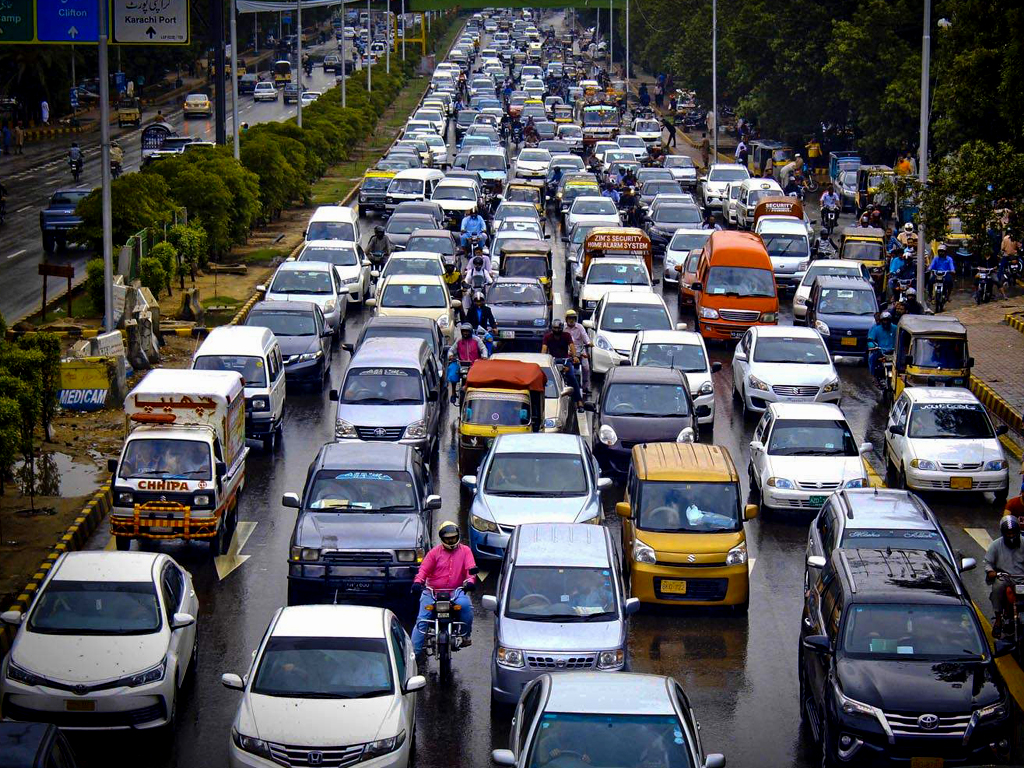
    The answer: Over 250 buses in Karachi that have the potential to help solve the massive public transport problems that exist in the city of more than 15 million people. [restrict level=1] 

    Launched by the PPP government in June 2022, the People’s Bus Service in Karachi and Larkana was supposed to operate just over 250 buses. It was a pretty simple matter. The Sindh Government would set aside a budget for the project and the SMTA would then procure buses, plan routes, figure out pricing and revenue collection, hire staff, and launch the project. Instead, the project was sub-let to the NRTC — a company that has no competence or relevance to public transportation. 

    That’s right, a federally owned company that produces telecommunication and electrical equipment has been awarded a contract for the running of a provincial bus service. So what is going on? Some have pointed towards the preferences of certain cabinet members for officials in the NRTC. But the web behind these buses is complicated and intertwined. To understand it, we need to go to the beginning.  

    The people’s bus service 

    Let’s take a step back. In June 2022, Pakistan People’s Party (PPP) Chairman Bilawal Bhutto Zardari inaugurated the intra-district Peoples Bus Service project for Karachi. Under the project, around 240 air-conditioned buses imported from China will be plied on seven routes in the metropolis. The longest route on the bus would cost Rs 50. 

    The buses were to run on seven routes. Route 1 commenced its operations in June running from Model Colony to Tower, covering 29.5 kilometres and having 38 stations. The other six routes include the areas from North Karachi to Indus Hospital (Korangi) 32.9km; Nagan Chowrangi to Singer Chowrangi (Korangi Industrial Area) 33km; North Karachi to Dockyard 30.4km; Surjani Town to PAF Masroor 28.2km; Gulshan-i-Bihar (Orangi Town) to Singer Chowrangi 29km and Mosamiyat to Baldia Town 28.9km.

    Alongside Bilawal Bhutto during this inauguration was Sharjeel Memon, the information minister in Sindh who has been the focal person for the People’s Bus Project. 

    To manage this project, the provincial government had established the Sindh Mass Transit Authority (SMTA) solely focused upon providing safe, efficient, and comfortable urban transportation systems in the major cities of Sindh. This in itself is a good step for the beleaguered citizens of Sindh ravaged by high inflation, sky rocketing fuel prices and endemic corruption in the province. But the involvement of the SMTA in the project seems to have been diluted, and strangely enough it is the National Radio and Transmission Company (NRTC) that is at the forefront of the project. 

    You see, in the first phase of the People’s Bus Service the SMTA was to operate 250 city buses and had to import 250 Buses for this purpose. Of these, there would be 150 low entry diesel-hybrid city buses of 12m in length and 100 low entry diesel-hybrid city buses of 8.5m in length for Karachi and Larkana. Sources close to the transport department informed Profit that an initial bidding process had taken place for the award of the Red Line (for which the above mentioned routes have been designated) but was then cancelled without any explanation to any of the participants. The contract was then unilaterally awarded to the NRTC. 

    Why the NRTC?

    That is the four billion rupee question. The NRTC is a high tech industry engaged in manufacturing of telecommunication equipment in Pakistan. The NRTC is an organisation of the Ministry of Defence Production (MoDP) is the sole National Electronic Industry engaged in design and development of cutting edge technologies in fields such as Robotics, Public Safety Network Communication, Power, Surveillance, Number Plates, Ground Surveillance Radars, and Cyber Security. 

    Questions were immediately raised about whether the awarding of the contract to the NRTC was against the rules of the Public Procurement Regulatory Authority (PPRA) which disallows any government tender to be given to a department that does not have the expertise in the relevant field. “By doing this SMTA is clearly violating PPRA rules by outsourcing ‘maintenance of Sindh Intra district peoples bus service’ project to non-transport, in this case NRTC,” said one source close to the story. 

    So why would the SMTA do this? The transit authority has maintained a tacit silence on the issue and has not responded to Profit’s many queries. However, sources close to the issue have said on condition of anonymity that the NRTC’s involvement was politically motivated and the SMTA had no other option but to comply with the wishes of senior ministers in the government. 

    Meanwhile, in different meetings, the high ups of the Transport & Mass Transit Department and GM-South of NRTC in their in-house discussion claimed that NRTC is a sovereign body and the Sindh Government has a mandate to award contracts on Government-to-Government basis to NRTC.

    MD SMTA Kamal Dayo did not respond to queries. Other senior officials continued to hesitate in speaking up and shifted the blame around before expressing no knowledge of the issue. On the other hand, GM South NRTC Sohaib Soddiqui told Profit that this was a misrepresentation of facts. “There is no PPRA rules violation and the department did not also sub-let the projects. SMTA and NRTC are government of Pakistan departments and this is a successful project,” he said. 

    Upon being pressed, the GM did not provide any explanation for his statement and did not answer the question of how the NRTC could get the contract without violating PPRA rules. He was also unable to provide an answer regarding what the NRTC’s competence is to be managing this project. 

    Sources with the transit department have continued to say that this decision to unilaterally award the contract was opposed intensely by the SMTA brass at the time, but they were overruled in order to safeguard and perpetuate the political interests of a provincial minister. “We recorded our protest back then because we knew it would be against PPRA rules. However, nothing could be done at that point and we had to give the go-ahead,” they said. 

    The problems with the NRTC takeover 

    This is where things stand. The Sindh Government launched a mass transit project that included 250 buses on seven routes as well as an additional ‘white line’ bus service for which they imported electric buses. Separately from this, they also launched a ‘pink’ bus service meant for women passengers. But for some reason, the National Radio Transmission Company was given the tender to import these buses and manage them. And that isn’t where this strange mixing of jurisdictional lines and awarding of contracts end. 

    Initially, when the NRTC was vying for the contract the mass transit department and other stakeholders were told that they had a Turkish partner who would assist them with the technical know-how. This allayed some concerns but as soon as the NRTC was awarded the contract the partner disappeared from conversations and was nowhere to be found. 

    Since the NRTC is not a transport company, they really had no idea how to manage this project. They further sub-leased the route to the present network operators like GRC (Pvt.) Ltd, Al-Shayma Services, Faisal Movers, KTN etc. all of whom are non-standardized transporters as per international norms and standard operating procedures.

    To just illustrate just one aspect of the unprofessional & non-technical nature of the way the NRTC bus routes are operated in Karachi, it has been learnt that NRTC was unable to conduct its own independent proper technical study by experts in the mass-transit field. Rather it is relying only on the study done by the Sindh Government.

    The present sub-contractors are providing a below par service on the new buses and hence the service is missing the four key elements of a scheduled bus service — timings, route, stops and fare are still not in place and are variable. In addition, there is no Information Technology based ticketing or monitoring system.

    Because these companies are subcontracted to run the service, many old habits such as lingering of busses on route to pick up paying passengers at non-designated stops coupled with a structural misunderstanding of how a bus service should be run have contributed to the fact that the Peoples Bus Service is being run in the same way as previous such bus schemes.

    This means that the bus service has essentially been subcontracted three times and is four times removed from the Sindh Mass Transit Authority which has the jurisdiction to run the project. The SMTA sub-let it to the NRTC which has sub-let it to TIP who have in-turn sub-let it to Al-Shayma, which has in turn sub-let to various local contractors, who have then sold individual routes to operators, which has badly affected the quality of the service. 

    NRTC Dispute with SMTA

    And this is where we get back to the fight. The reason the SMTA’s CEO and NRTC’s  chairman almost came to blows was that the project involves some serious money and revenue collection. The government of Sindh had created the SMTA particularly to manage Karachi’s abysmal public sector transport situation. However, for the management contract of such a product to be awarded to a company like the NRTC ruffled the feathers of the SMTA high-ups. 

    Soon after the near-brawl, Channa was transferred from his post as CEO because he continued to raise questions about how the NRTC could take over the project with no competence on the issue. Profit reached out to multiple officials of the NRTC but this correspondent was received coldly and with curt, empty answers. Profit also reached out to Sindh Information Minister Sharjeel Memon multiple times but did not receive any response despite messages having been read. Interestingly enough, Mr Memon’s display picture on Whatsapp is an image of a bus from the People’s Bus Service. Officials of the SMTA expressed their apologies and said they could not comment, but some high-ups in the authority on the condition of anonymity expressed anger towards the blatant awarding of the contract to the NRTC. “They are playing political favourites,” said one of the sources that spoke anonymously. 

    Some of the issues are that the NRTC has been unable to undertake the development of stops, yards, management & financial controls, or even a main centralised command and control centre for SMTA as promised. What little work has been done is on an ad hoc basis and is not up to international specifications.

    One of the major disputes is on the installation of the Automatic Revenue Collection System (ARC). The ARC and associated IT systems such as ticket issuance etc. was to be installed by NRTC, but until now that has not been done. In the absence of an ARC there is no way to verify what revenue is being collected and how much is actually making it back to the Sindh Government. As per information NRTC has paid its vendor GCS (Pvt.) Ltd. in full for the system but they have been unable to deliver it to date.

    Ill-conceived from the get-go

    In the absence of proper financial control and the reliance on human interaction for issuance and collection of tickets there is a significant leakage that is happening. That is even more surprising is that when SMTA was pushing for an internal extended audit of accounts and physical audit by third parties to verify the revenues collected and of the numbers, NRTC flatley refused and black balled them. So again, here the people of Sindh are losing out because of belligerence of NRTC and leakage from the system.

    In the same way the NRTC is refusing to account to SMTA for the ad revenue that is collected. NRTC is offering SMTA only Rs. 70,000/- per month per bus as additional revenue from advertising on the buses, while they are averaging between Rs. 400,000 – Rs. 500,000 per bus. 

    While, the agreement with NRTC is that NFR there will be an equal split between the two parties, which is not being followed. The second main point of contention is that fuel indexation formula. This formula was put together by qualified third parties, in this case Ernst and Young (EY) and Exponent Engineering, both of whom are of international repute. Yet, NRTC is belligerent that the formula is wrong and that it needs to be changed.

    When the SMTA and its consultants have pushed back and asked for a written alternative of how NRTC wants the calculations done or its reservations, the NRTC team is unable to provide them anything in writing.

    NRTC is also belligerent that the number of passengers per day provided by SMTA and consultants is wrong. The consultants had provided a number of 700 passengers per bus a day and it is NRTC’s contention that they don’t get more than 400 passengers a day. The number provided by NRTC is a wild guess at best because they have been unable to conduct their own independent survey due to their lack of knowledge about urban transport and its associated protocols.

    The project itself, envisioned by a presumably more enlightened third generation leadership of the PPP under Bilawal Bhutto, to address Karachi’s perennial public transport’s nightmarish problems, has evidently come crashing down owing to the same old problems.

    It seems that even this solution to Karachi’s mess of a public bus service became a problem for all the bottom feeders living off it. [/restrict]

    Shahzad Paracha
    Shahzad Paracha
    The writer is a member of Pakistan Today's Islamabad bureau. He can be reached at [email protected]
    [adinserter name="_av_sidebar_top"]
    [td_block_7 custom_title="Popular Posts" block_template_id="td_block_template_14" header_text_color="#f4f4f4" top_border_color="#f4f4f4" bottom_border_color="#444444" header_color="#000000" m6f_title_font_family="638" f_header_font_weight="500" f_header_font_transform="uppercase" f_header_font_size="14" offset="20" tdc_css="eyJhbGwiOnsibWFyZ2luLXRvcCI6IjEwIiwiZGlzcGxheSI6IiJ9fQ=="]
    [adinserter name="_av_sidebar_bottom"]