


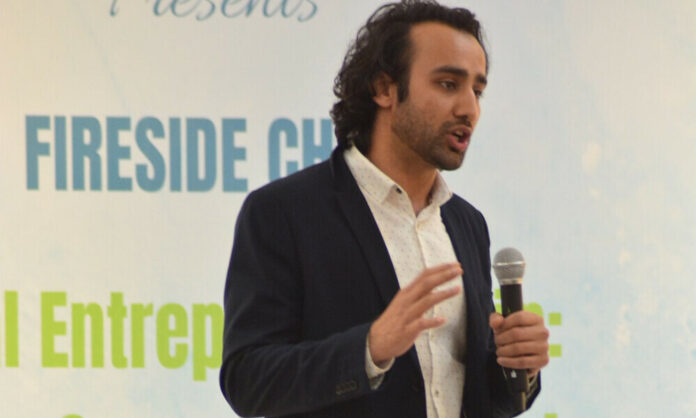
DUBAI: Bilal Bin Saqib, chairperson of the Pakistan Virtual Assets Regulatory Authority (PVARA), shared an ambitious roadmap for Pakistan’s crypto space at the Binance Blockchain Week Dubai 2025. Speaking alongside industry leaders such as Binance CEO CZ, Michael Saylor, and UAE AI Minister Omar Sultan Al Olama, Saqib highlighted Pakistan’s potential to turn its rapidly growing crypto market into a global case study.
“Pakistan is the world’s third-largest crypto market without any regulatory framework,” Saqib told the audience. “Now, we want to turn this momentum into a global case study.”
Despite the lack of a formal regulatory framework, Pakistan continues to rank as one of the most active crypto markets. According to the 2025 Chainalysis Global Crypto Adoption Index, Pakistan holds the third spot globally, ahead of major economic players like China, Germany, and Japan. The country also ranks second in retail-size crypto transactions and third in centralized exchange activity, demonstrating that crypto is actively traded, not just discussed.
“Our goal is to channel this momentum into a structured regulatory framework that protects investors and encourages innovation,” Saqib emphasized.
While Pakistan’s crypto activity is high, the actual number of crypto users remains unclear, with estimates ranging from 20 to 40 million unverified users. These rankings focus on transaction activity rather than the number of individual holders, with Pakistan continuing to show strong potential despite the absence of comprehensive user data.
Pakistan’s youthful and tech-savvy population is a key factor in the growing interest in digital assets. With 250 million people, the country boasts one of the youngest populations in the world. Saqib expressed that Pakistan’s leadership aims to create an enabling environment to harness the potential of this demographic.
Supporting research further highlights that enjoyment, social influence, ease of use, and financial literacy are key drivers of crypto adoption. A 2025 study presented at the IBA SBS International Conference found enjoyment to be the main factor influencing crypto adoption in Pakistan. Another study in Computational Economics pointed out that many Pakistanis view crypto as a transparent alternative to traditional finance.
However, challenges remain. Cultural, religious concerns, regulatory uncertainty, and a lack of consumer protection have created obstacles to wider adoption. Entrepreneurs in the sector also cite internal resistance and social factors as barriers to growth.
Despite these hurdles, the enthusiasm for crypto remains high, particularly among the younger, tech-savvy population. The country is on track to develop an ecosystem that balances growth with security.
PVARA’s formation is Pakistan’s first step toward regulating its rapidly growing digital asset sector. The authority is focused on licensing exchanges, wallets, custodians, and stablecoin issuers, while ensuring alignment with global anti-money laundering standards and implementing mechanisms to protect investors.
Saqlib pointed out that Pakistan is working on policies for stablecoins, digital-asset infrastructure, and cross-border innovation, positioning these areas as potential global case studies for other countries to follow.
The creation of PVARA marks Pakistan’s shift from a reactive to a proactive stance in crypto regulation, addressing both innovation and investor protection.
Pakistan stands at a unique intersection of opportunity and caution. The country has a large, active, young crypto user base, while a new regulatory framework is being developed to provide oversight. The rise in crypto adoption, especially among youth and tech-savvy individuals, signals a promising future, but risks persist, including volatility, scams, and uneven public understanding.
For now, Pakistan is actively participating in the global crypto conversation, drawing attention to its growing market, with its future resting on how well the government can balance regulation, innovation, and growth.