


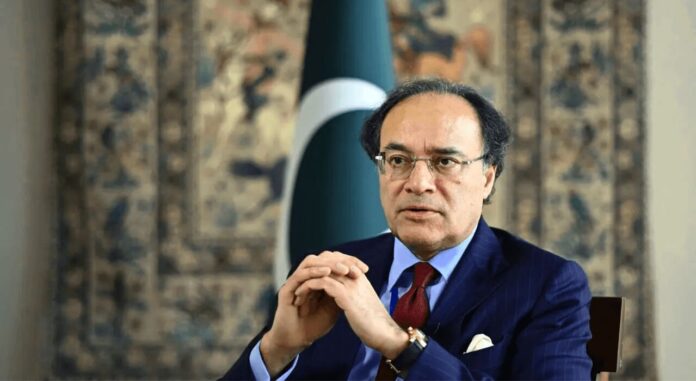
Federal Minister for Finance and Revenue, Senator Muhammad Aurangzeb, stated that Pakistan has reached a critical turning point, with macroeconomic stability, sustained reforms, and policy continuity steering the country towards export-led, long-term growth.
In an interview with USA Today, he emphasised that this transition has opened new opportunities for both domestic and global investors. He explained that the country’s progress is driven by macroeconomic stabilisation, easing inflation, and improved external balances. The government is focusing on export-led, productivity-based growth, supported by structural reforms, including in agriculture, minerals, technology, and climate resilience.
He further highlighted that, for the first time in years, Pakistan has achieved both a primary fiscal surplus and a current account surplus, marking a shift away from recurring deficits.
He highlighted that strong remittance inflows and a decline in inflation from a peak of 38% to single-digit levels have played key roles in supporting this positive shift. Foreign exchange reserves have also risen to over $14.5 billion, offering import cover of approximately two and a half months, while the exchange rate has remained stable, boosting investor confidence.
Despite this progress, Aurangzeb pointed out that sustainable growth remains the central challenge. He stressed that the economic growth rate of 2.7% in the previous fiscal year, while positive, is insufficient to meet the needs of a rapidly growing population. Pakistan is consciously moving away from a consumption- and debt-driven growth model towards an export-led strategy, as reflected in the current budget, which includes structural reforms in taxation, energy pricing, and state-owned enterprises.
He also highlighted key sectors with strong potential, such as information technology, textiles, and agriculture. IT exports have already crossed $4 billion, with the potential to double within five years, given sustained regulatory clarity and infrastructure development. Efforts are underway to simplify tax regimes for exporters and reduce bureaucratic hurdles to foster long-term productivity and competitiveness.
Aurangzeb addressed the broader reform agenda, which includes privatisation of state-owned enterprises, tariff liberalisation, and restructuring of the energy sector. These initiatives aim to address long-standing inefficiencies that have historically strained public finances. He also referred to Pakistan’s partnership with the World Bank through the ten-year Country Partnership Framework, emphasising economic reform alongside climate resilience and population management.
The finance minister also underscored the importance of addressing challenges beyond fiscal indicators, such as population growth, climate change, child stunting, learning poverty, and the exclusion of girls from education. Increasing women’s participation in education and the workforce is both a social imperative and an economic necessity, he added.
On climate resilience, Aurangzeb noted Pakistan’s efforts to collaborate with multilateral partners to strengthen preparedness against floods and droughts. While acknowledging risks such as global commodity price shocks, external debt pressures, and political uncertainty, he reaffirmed the government’s commitment to staying on the reform course despite these challenges. He stressed that discipline, consistency, and international cooperation are key to safeguarding the gains made.
Aurangzeb highlighted investment opportunities in agriculture, minerals and mining, and the emerging digital economy. He pointed to Pakistan’s agricultural potential, the Tethyan Copper Belt in Balochistan, and the growing digital economy, particularly in data centres, artificial intelligence, and digital services. The government is updating regulatory frameworks to support innovation and attract foreign investment, particularly from the United States.
In conclusion, Senator Aurangzeb invited global investors and partners to engage with Pakistan through trade, investment, and collaboration, emphasizing the country’s ongoing reforms, economic potential, and natural beauty. He reiterated that Pakistan is transitioning from a narrative of crisis management to one of opportunity and transformation, offering promising prospects for those willing to engage with a market on the cusp of sustainable growth.