More

    JDW’s expansion of its ethanol production

    Expansion into auxiliary production should help expand its margins in an otherwise tough year

    JDW Sugar Mills Limited (PSX: JDWS) has released its condensed interim accounts for the nine‑month period ended 30 June 2025, and the numbers underline a challenging year for the country’s largest sugar producer.

    Gross revenue fell 4% to Rs97.9 billion (9M‑FY24: Rs102.0 bn), while net sales after taxes and commissions eased to Rs84.7 bn from Rs89.4 bn – a 5% contraction that management attributes to a sharp correction in domestic sugar prices during the first half of the fiscal year.

    As costs rose faster than sales, gross profit halved to Rs9.87 bn (9M‑FY24: Rs18.10 bn), pulling the gross margin down to 12% from 20 pc. The directors note that molasses realisations have also dipped 25% year‑on‑year, squeezing by‑product economics.

    On the bottom line, profit after tax plunged 63% to Rs3.09 bn, translating into earnings per share of Rs53.39 versus Rs144.86 a year earlier. [restrict level=1]

    The results commentary spells out five key drivers behind the earnings decline. First, JDW was forced to sell sugar below cost early in the season to fund working‑capital needs amid a glut in inventories sector‑wide. Second, administrative expenses ballooned under double‑digit inflation. Third, the fair‑value gain on the cane crop shrank markedly, dragging “other income” down to Rs1.91 bn from Rs2.94 bn. Fourth, while finance costs did recede by Rs1.14 bn in line with lower policy rates, the saving could not offset the fall in operating profit. Finally, the new 18% levy on sugar exports shaved more than a billion rupees off pre‑tax earnings.

    Despite the earnings slump, the balance‑sheet size swelled to Rs94 bn (September 2024: Rs70 bn) after the company capitalised its ongoing capital‑expenditure cycle – most conspicuously the ethanol/distillery project discussed below. Gearing remains manageable: total equity of Rs28.4 bn funds roughly 30% of the asset base, while short‑term borrowings cover seasonal stockpiles and cane procurement.

    Cash‑flow optics are mixed. Operating cash flow swung back into the black at Rs9.38 bn on the strength of cane‑supplier advances and inventory run‑down, yet a hefty Rs17.1 bn outlay on property, plant and equipment – largely the new ethanol plant – left free cash flow deeply negative. The company bridged the gap through fresh long‑term finance and a Rs16.6 bn reduction in short‑term facilities, helped by timely sugar off‑take.

    Notwithstanding the squeeze, directors approved a first interim dividend of Rs20 per share (200 pc) and sounded an upbeat note for the full year, citing firmer sugar prices, lower borrowing costs and the imminent commissioning of the ethanol unit.

    JDW’s revenue historically came from three inter‑locking lines:

    Segment Main products Revenue drivers FY25 dynamics
    Sugar Crystalline white sugar Ex‑mill prices, sucrose recovery, crushing volumes Prices crashed in 1H‑FY25 but have since rebounded; cane procurement now fully market‑linked.
    Power co‑generation Export of surplus bagasse‑based electricity (Unit II & III) Bagasse calorific value, NEPRA tariff indexation Remained profitable thanks to fuel‑cost pass‑through, cushioning the sugar downturn.
    By‑products Molasses, mud, bagasse Spot molasses prices, fertiliser demand Molasses realisations fell 25% YoY, prompting downstream diversification.

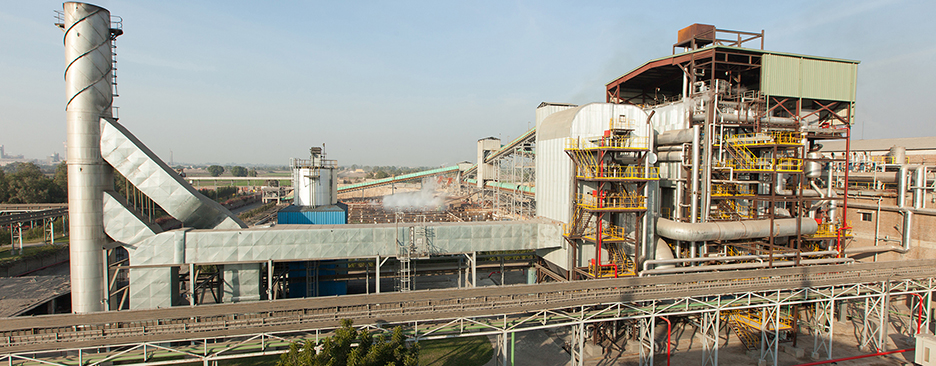
    To hedge commodity swings, JDW has moved decisively into fuel‑grade ethanol, leveraging the molasses that streams out of its three mills. The greenfield distillery at Pir Ahmedabad, Sadiqabad fired up its burners on 12 July 2025, with trial production running “smoothly” ahead of commercial operation targeted for 1 August 2025. Name‑plate capacity is a robust 230,000 litres per day, and management says sufficient molasses stocks exist to keep the plant at 100% utilisation until the 2025‑26 crushing season starts.

    The ethanol will be aimed primarily at the export market, where Pakistani producers currently enjoy duty‑free access to several Asian blend markets and stable demand from European beverage and industrial buyers. Given the plant’s scale, analysts reckon ethanol could generate Rs25‑30 bn in incremental annual revenue at prevailing FOB prices, potentially restoring JDW’s historical profit trajectory even if sugar margins remain volatile.

    The company has also piloted a solar‑powered tube‑well financing scheme for its cane growers, hoping to lift field yields and secure quality feedstock – an indirect but strategic move to de‑risk its raw‑material supply chain.

    JDW was incorporated in May 1990 as a private limited company and went public in August 1991, listing on what is now the Pakistan Stock Exchange. From a single 6,500‑tonne‑per‑day (TCD) mill at Jamal‑din Wali (Unit I), the group has expanded into a three‑mill, 44,500 TCD powerhouse straddling Punjab and Sindh. Key milestones include:

    • 1998‑2002 – Capacity leap: Unit II at Machi Goth and Unit III at Ghotki came on‑stream, cementing JDW’s status as Pakistan’s largest sugar producer.
    • 2006 – Co‑generation diversification: Two high‑pressure bagasse turbines (80 MW each) enabled the sale of renewable power to the national grid, earning carbon‑credit income and reducing bagasse disposal costs.
    • 2014‑17 – Vertical integration: Acquisition of Deharki Sugar Mills and investments in corporate cane farms broadened raw‑material control.
    • 2023 – Ethanol strategy approved: The board sanctioned a state‑of‑the‑art distillery with daily output of 200,000‑230,000 litres, financed through a mix of debt and internally generated cash.(The News International, Mettis Global)
    • July 2025 – Trial production starts: The plant lights up, marking JDW’s first step into higher‑margin bio‑fuels.

    Today, JDW also holds stakes in two captive‑power subsidiaries (Sadiqabad Power and Ghotki Power) and in Faruki Pulp Mills, underscoring a strategy of adjacent diversification. Its credit profile is strong: VIS Credit Rating reaffirmed an AA‑/A‑1 rating in May 2025, citing robust cash generation and prudent capital structure.

    Management is candid that FY25 has been “a year of reset” as the sugar sector inches towards deregulation. With provincial governments abstaining from setting a support price for cane for the 2024‑25 crop, mills – for the first time in decades – paid fully market‑based rates. JDW argues that full deregulation, including parity between imported and local sugar prices, is critical if mills are to invest in yield‑enhancing technology and stabilise grower incomes.

    In the near term, three swing factors will determine whether JDW’s earnings rebound:

    1. Sugar price trajectory – spot rates have firmed since April as inventories cleared, but another supply‑glut cannot be ruled out if the federal government allows duty‑free imports.
    2. Ethanol ramp‑up – every 10% increase in utilisation could add roughly Rs1.5 bn to the top line, according to brokerage estimates.
    3. Interest‑rate path – the State Bank has trimmed its policy rate by a cumulative 11 percentage points over 12 months; each 100‑bp cut shaves Rs450‑500 million off JDW’s annual finance cost.

    For investors, the story is transitioning from a pure‑play sugar cyclical to a bio‑fuels and energy hybrid. If the distillery runs as advertised and export orders materialise, JDW could claw back much of the margin lost in FY25. But sustainable value creation will still hinge on sectoral reform that aligns cane economics with global sugar benchmarks.

    For now, the company’s motto of “creating opportunities for the future” seems more than marketing spin: by distilling its own by‑product into a high‑value export, JDW is quite literally turning molasses into money – and offering shareholders a new source of sweetness after a decidedly bitter year. [/restrict]

    LEAVE A REPLY

    Please enter your comment!
    Please enter your name here

    [adinserter name="_av_sidebar_top"]
    [td_block_7 custom_title="Popular Posts" block_template_id="td_block_template_14" header_text_color="#f4f4f4" top_border_color="#f4f4f4" bottom_border_color="#444444" header_color="#000000" m6f_title_font_family="638" f_header_font_weight="500" f_header_font_transform="uppercase" f_header_font_size="14" offset="20" tdc_css="eyJhbGwiOnsibWFyZ2luLXRvcCI6IjEwIiwiZGlzcGxheSI6IiJ9fQ=="]
    [adinserter name="_av_sidebar_bottom"]