January 5, 2026
Can Pakistan’s textiles be revived?
January 5, 2026

This story is the second in a two-part feature focusing on the problems that plague Pakistan’s textile industry, and the solutions voices from within the industry have to offer. With unprecedented access and interviews across the entire textile supply chain from cotton fields to foreign markets, the story charts the history and future potential of Pakistani textiles. Find the first part in last week’s issue of Profit and online at https://profit.pakistantoday.com.pk/.
In our previous story, we traced the decline of Pakistan’s textile industry, following the path of cotton from the field to the retail market. Along the way, we identified the many hurdles that have crippled the once-thriving sector. From raw material shortages, particularly the decline in cotton production, to energy inefficiencies, unpredictable government policies, and a crippling tax regime, each step of the textile value chain has faced severe challenges. The impact has been profound: Pakistan’s textile exports have stagnated, its share of the global market has dwindled, and once-bustling factories have shuttered, leaving behind only the memories of a once-vibrant industry.
But is there hope for Pakistan’s textile sector? Can this cornerstone of the country’s economy, which accounts for more than 50% of exports, be revived? The answer is complex. The problems are deeply rooted, spanning decades of mismanagement, policy inconsistency, and underinvestment. Yet, despite the gravity of the situation, there is a way forward. With the right mix of timely government intervention, a focus on long-term industrial policies, and the restoration of investor confidence, Pakistan’s textile industry can rise again.
Reviving the textile sector is no easy task. It requires not just addressing the immediate pain points but also creating a conducive environment for sustainable growth. Pakistan’s global textile competitors like Bangladesh, Vietnam, and India have shown remarkable resilience, largely due to their focus on consistent, pro-business policies, affordable energy, and a steady supply of raw materials. For Pakistan to catch up, it will need a coherent and integrated strategy that spans the entire textile value chain, from cotton farming to the retail floor.
The challenges may seem insurmountable, but experts and industry leaders agree that with proper intervention, Pakistan can turn things around. Kamran Arshad, Chairman of the All Pakistan Textile Mills Association (APTMA), highlights that the industry has the potential to grow, but the government's focus on short-term measures, such as debt servicing, rather than long-term industrial policies, has hindered progress. “We need stability, long-term policies, and affordable energy to allow the entire value chain to thrive,” says Arshad.
This is where the government’s role becomes critical. Over the years, policymakers have failed to create an enabling environment for the textile industry. Unpredictable tax rates, energy crises, and inconsistent regulations have crippled the sector. But if the government takes concrete steps to streamline policies, stabilize energy prices, and provide incentives for value addition, the situation can be reversed. In particular, the introduction of stable, long-term energy policies and a revamp of the taxation system could provide the necessary foundation for the industry’s revival.
For cotton farming, a return to the golden days of cotton cultivation is possible, but it requires significant investment in research, better seed varieties, and subsidies for farmers. “Cotton cannot survive without support from the government,” says Khalid Khokhar, President of Kissan Ittehad, highlighting the vital need for investment in cotton research and pest-resistant seeds. In addition, incentivizing cotton farmers to return to cultivation—by offering better returns and financial support—would ensure a consistent supply of raw materials for the textile industry.
In the ginning, spinning, and weaving stages, energy efficiency is key. Pakistan’s textile mills face some of the highest energy costs in the region, making it nearly impossible to compete globally. Tariq Basharat Cheema, an energy expert, emphasizes the need for a shift towards renewable energy sources. Solar and wind power could help reduce costs and increase competitiveness. “If utilities simply finished, industrialists wouldn’t have to worry about this,” says Cheema, urging the government to increase investment in green energy initiatives to power the textile industry.
At the retail level, Pakistani brands have tremendous potential to scale globally. Asad Shafi, owner of the fashion retail brand Cross Stitch, points to the success of local brands like Rastah as evidence of Pakistan’s capacity to dominate the global market. With the right infrastructure and investment, these brands could expand beyond the local market, competing with global giants. However, Shafi stresses that local brands cannot grow without a supportive domestic market infrastructure. “Our brands need better retail infrastructure and policies to help them grow locally before they can expand globally,” he says.
The textile industry’s revival is certainly an uphill battle, but it is far from impossible. If the government provides the necessary support and consistency, there is every reason to believe that Pakistan can regain its former glory as a textile powerhouse. The road ahead will be tough, but the opportunity is there. With the right policies in place, Pakistan can once again become a global leader in textiles. This is the story of the fixes we need from the cotton field all the way to the export container.
Reviving the foundations
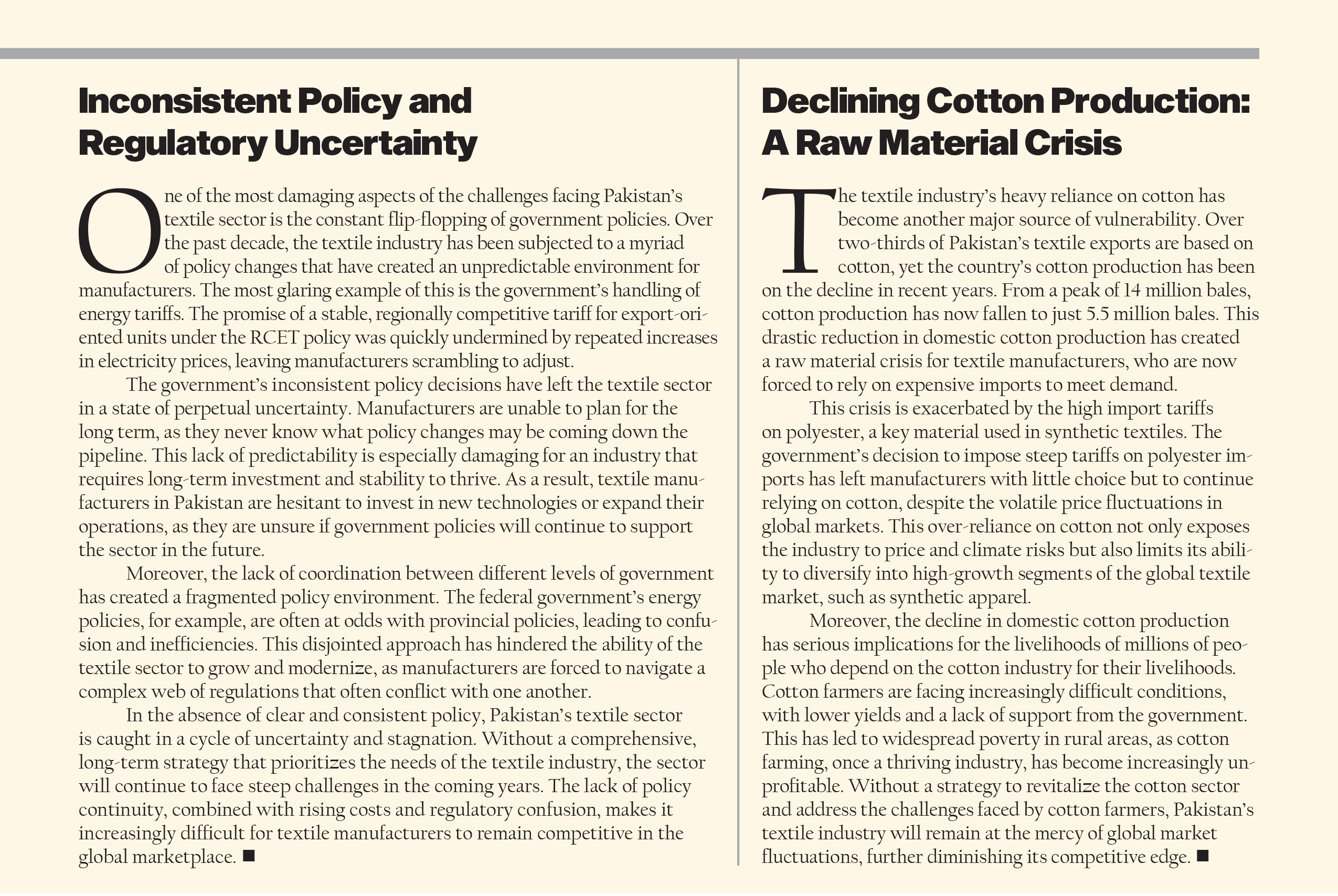
Pakistan’s textile industry has always been built on a strong foundation of locally grown cotton. For centuries, the fertile plains of Punjab and Sindh have supplied the world with this “white gold,” but in recent decades, the cotton crop has been in a steep decline. From 14 million bales in 2005 to just 5 million bales last year, Pakistan's cotton output has halved. The reasons for this decline are multifaceted, but the most pressing issue is the inability to meet the evolving needs of cotton farmers. While the textile sector is deeply interconnected with the agricultural sector, the lack of consistent policy support for cotton cultivation has left the industry in a precarious position.
The first step toward reviving the textile industry lies in restoring cotton farming to its former glory. This requires substantial government intervention to ensure that farmers have access to better seeds, modern farming techniques, and consistent, favorable policies. Khalid Khokhar, President of Kissan Ittehad, emphasizes that Pakistan's cotton industry cannot recover without addressing the root causes of its decline. “The biggest problem in agriculture today is climate change, and without addressing it, we cannot expect our cotton fields to flourish again,” he explains. He points to the decline of cotton farming in key regions like Kasur, Rahim Yar Khan, and Sargodha, where sugarcane and rice have taken over. These crops, though profitable, are water-intensive and ultimately unsustainable, leaving the land barren.
To combat this, the government must prioritize cotton research and seed development. “We’ve been growing the same seed varieties for years, but they are not disease-resistant anymore,” says Khokhar. Without research into new, pest-resistant cotton varieties, farmers will continue to face losses. The development of these varieties should be a government-funded initiative, focusing on not just disease resistance, but also resilience to the changing climate. This, paired with better access to fertilizers and pesticides, would allow farmers to increase yields and make cotton farming a more attractive option.
Incentivizing cotton cultivation with subsidies, tax breaks, and loan facilities would also help ensure a steady supply of raw materials for the textile industry. As Kamran Arshad, Chairman of APTMA, points out, “To utilize our labor advantage, we need to encourage local cotton growth, even if it means supporting farmers for a few years.” Currently, the market does not provide enough financial incentive for farmers to invest in cotton cultivation, especially when the crop is so susceptible to diseases and climate shifts. The government must intervene by offering support packages to cotton farmers that include direct subsidies, loans for buying modern equipment, and guaranteed prices for their harvests.
Lastly, improving the efficiency of irrigation systems is vital for increasing cotton yields. Pakistan’s cotton-producing regions have been plagued by water shortages, a problem exacerbated by the shift to more water-intensive crops. With water becoming an increasingly scarce resource, it is imperative that cotton farming is prioritized in water allocation policies. The government must invest in modern irrigation techniques, such as drip irrigation, which can drastically reduce water waste and ensure that cotton fields receive the adequate amount of water they need.
Restoring cotton farming to its former glory is a key component of Pakistan’s textile industry revival. However, this can only happen through long-term, consistent government policies that support farmers and address the root causes of the decline. With proper investments in research, subsidies, and irrigation infrastructure, Pakistan can once again become a major player in the global cotton market, ensuring that its textile sector remains competitive on the world stage.
Tackling energy costs
Energy is one of the most significant costs for Pakistan’s textile sector. Whether it is powering the spinning mills, weaving machines, or ginning plants, the energy-intensive nature of the textile industry makes it highly vulnerable to fluctuating energy prices. The high cost of energy, especially electricity and gas, has been a constant challenge for Pakistan’s textile sector, significantly affecting its ability to compete with regional competitors like Bangladesh, Vietnam, and China.
The energy crisis in Pakistan has also spilled over into the agricultural sector. As Khalid Khokhar points out, “Farmers are being bled dry because our energy prices are higher than industrial accounts.” The cost of running irrigation pumps and processing cotton at the farm level is significantly higher in Pakistan than in competing countries, further discouraging cotton farmers from cultivating the crop. In turn, this raises the cost of raw materials for textile mills, compounding the challenges faced by the industry.
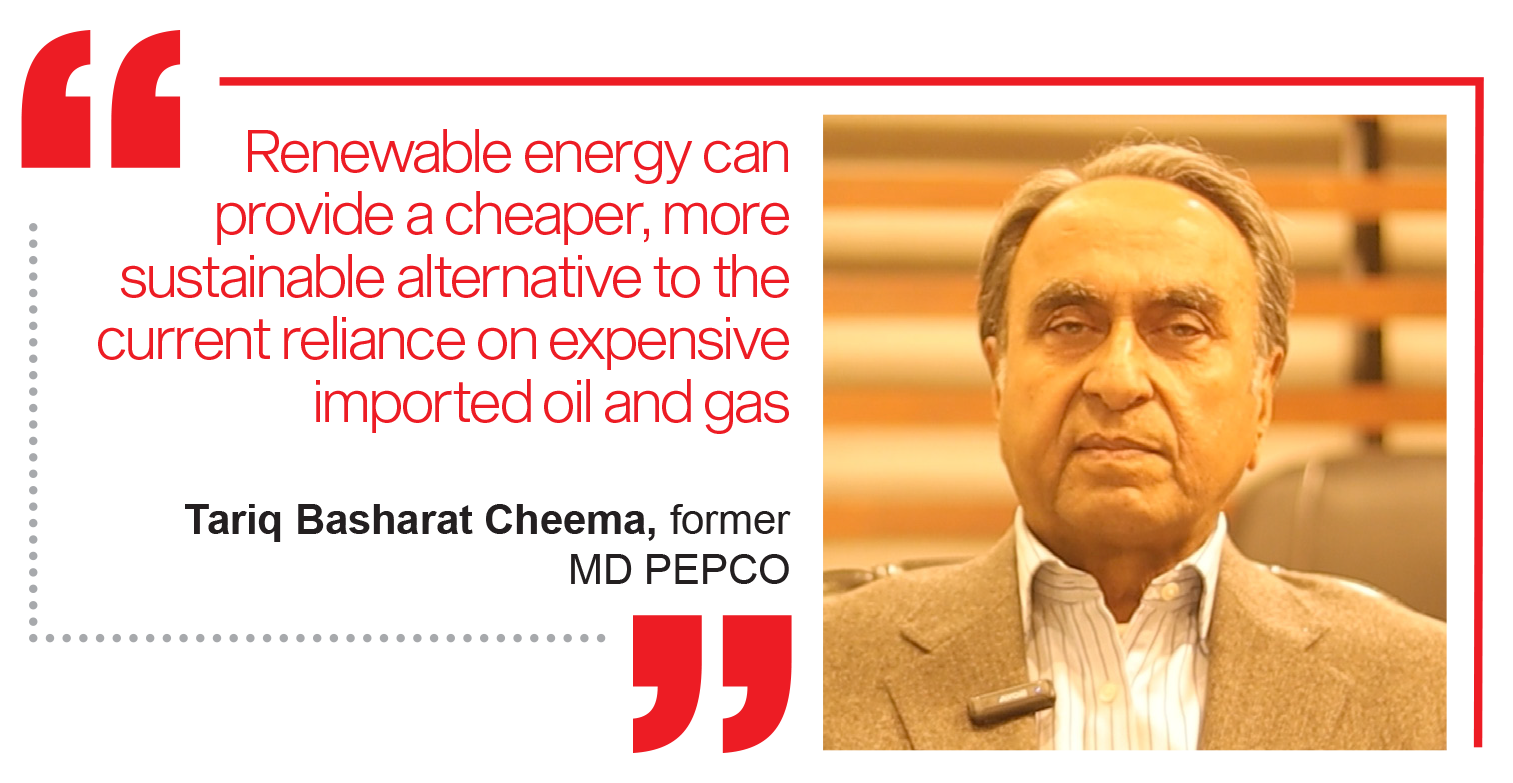
One of the key solutions to the energy problem lies in shifting towards renewable energy sources. Tariq Basharat Cheema, an energy expert, advocates for the integration of solar, wind, and biomass energy into Pakistan’s industrial energy mix. “Renewable energy can provide a cheaper, more sustainable alternative to the current reliance on expensive imported oil and gas,” Cheema says. This would not only reduce energy costs for textile mills but also help mitigate the environmental impact of fossil fuel-based power generation. The government can play a crucial role by offering incentives for industries to invest in renewable energy infrastructure, such as tax rebates or subsidies for the installation of solar panels or wind turbines.
Moreover, Pakistan’s current energy tariff structure needs a complete overhaul. “The price of electricity for industries in Pakistan is about 12.5 cents per unit, while in competing countries, it’s as low as 6-9 cents per unit,” says Kamran Arshad. This price disparity puts Pakistani textile manufacturers at a severe disadvantage. To level the playing field, Pakistan must work towards reducing energy prices for the textile industry, ideally bringing the cost of electricity down to around 8 cents per unit, as suggested by Arshad. This can be achieved through a combination of policy changes, such as reducing energy subsidies for other sectors and redirecting them to energy-intensive industries like textiles.
Furthermore, streamlining energy access for cotton farmers is also a critical step in addressing the high cost of production. As mentioned earlier, cotton farming in Pakistan is heavily reliant on irrigation systems that consume large amounts of energy. Providing farmers with access to cheaper, renewable energy for irrigation pumps and processing plants could significantly reduce their production costs and make cotton farming more viable.
Beyond renewable energy, Pakistan must also focus on improving the efficiency of its energy distribution systems. Tariq Basharat Cheema emphasizes that the government needs to fix the failures within its electricity distribution system, which often leads to power outages and high transmission losses. By investing in grid infrastructure and reducing technical losses, the government can help ensure a more reliable and affordable energy supply for the textile industry.
Lastly, the government should provide incentives for industries to adopt energy-efficient technologies. The implementation of energy-saving measures such as LED lighting, high-efficiency motors, and automation in the production process can reduce overall energy consumption and lower costs. This will not only help textile mills become more competitive but also contribute to the broader goal of reducing Pakistan’s carbon footprint.
No single factor is more important in the revival of Pakistan’s textile sector than addressing the high cost of energy. By shifting towards renewable energy, streamlining energy access for farmers, and overhauling the energy tariff system, Pakistan can significantly reduce the cost of production in its textile industry. With the right policies and investment, the country can ensure that its textile sector becomes globally competitive once again, while also fostering sustainable growth in its agricultural sector.
Going back to exports
But even for the players that manage to get to the stage of global competition and have sustained their factories there are significant challenges. With global competition intensifying and regional competitors like Bangladesh, India, and Vietnam gaining ground, Pakistan's textile exports have stagnated. As Kamran Arshad points out, the lack of a consistent policy environment has been a major hindrance. “We need stability, long-term policies, and affordable energy to allow the entire value chain to thrive,” Arshad says. The issue lies not just in raw materials or energy costs, but in the broader export environment that is shaped by taxation and policy inconsistency.
Despite the obstacles, there are examples within Pakistan’s textile industry that demonstrate its potential. For instance, Gul Ahmed, one of the country’s most well-known textile companies, has managed to weather the storm and continue its operations in the global market. Contrary to recent rumors, the company is not shutting down its exports. Instead, it has focused on diversifying its product lines and strengthening its presence in international markets. This resilience is a testament to the capacity of Pakistan’s textile sector to adapt, even in the face of adversity. If other textile companies adopt similar strategies—focusing on product diversification and expanding market outreach—there is hope for the revival of Pakistan’s textile export potential.
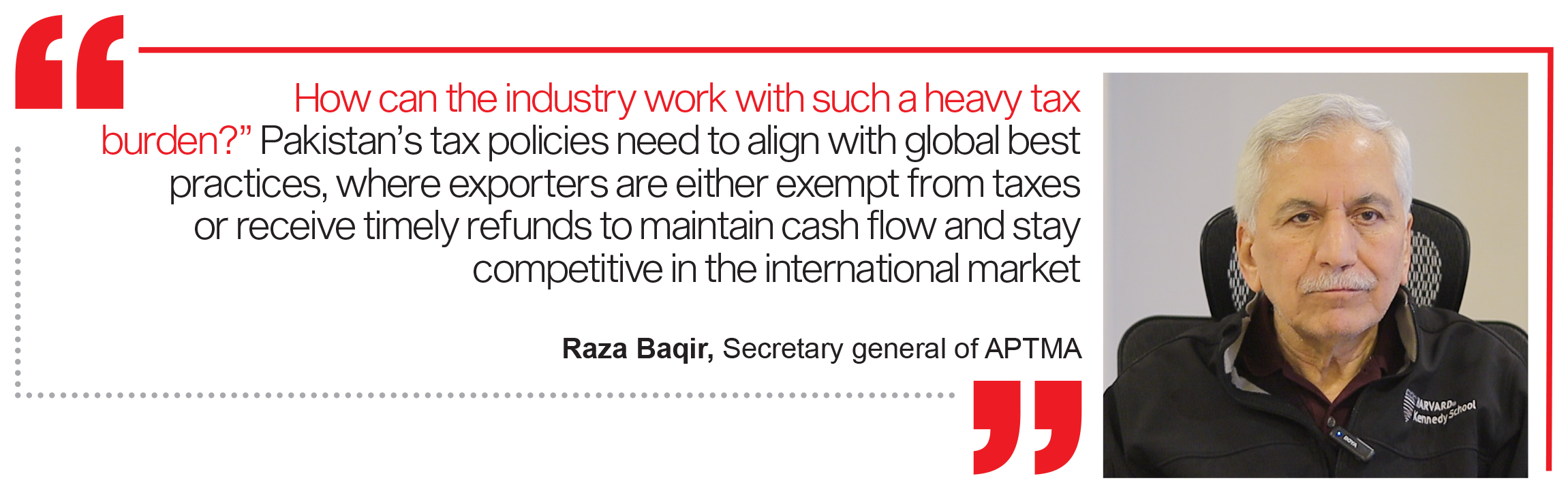
However, for a sustained recovery, the government must provide a stable and favorable export environment. The government should eliminate export taxes or, at the very least, refund them promptly, as is common in other textile-exporting countries. Pakistan’s tax regime currently imposes a heavy burden on exporters, with rates reaching up to 50% in some cases. This is a major deterrent for businesses looking to scale their export operations. As Raza Baqir, Secretary General of APTMA, explains, “How can the industry work with such a heavy tax burden?” Pakistan’s tax policies need to align with global best practices, where exporters are either exempt from taxes or receive timely refunds to maintain cash flow and stay competitive in the international market.”
Another challenge to Pakistan’s textile exports is the lack of support for expanding domestic brands to international markets. While local brands like Cross Stitch have made strides in catering to the domestic market, they face significant barriers when it comes to international expansion. As Asad Shafi, owner of Cross Stitch, explains, “We have massive brands here that can scale globally, but they need to work and grow in the local market first.” The government must play a role in creating export-oriented industrial parks that provide the necessary infrastructure for brands to grow. These parks could offer logistical support, access to export incentives, and partnerships with global retailers, making it easier for brands to establish a foothold in international markets.
At the same time, textile mills must focus on improving the quality and competitiveness of their products. Product diversification is key to expanding into new markets. Musadaq Zulqarnain’s Interloop, for example, achieved significant success by focusing on the production and export of socks, which have a global demand. His story shows that Pakistan’s textile sector can achieve success with a focused, niche approach that aligns with global trends. Local textile companies must take inspiration from such success stories and explore niche markets, such as eco-friendly textiles or premium quality garments, to increase their competitiveness.
Additionally, the development of a stronger domestic retail market can serve as a foundation for export growth. Asad Shafi highlights the importance of building a competitive local market before going global. “If our brands can grow locally, they can go beyond,” he says. Pakistan has a burgeoning middle class with growing demand for high-quality, locally made products. This domestic market can provide the foundation for textile companies to refine their products, build brand recognition, and gain the experience necessary to succeed in international markets.
The export sector needs coordinated action from both the government and textile mills. The government must provide financial incentives, tax breaks, and infrastructure support to encourage local brands to expand internationally. Simultaneously, textile mills need to focus on product innovation, quality improvement, and market expansion. The combination of these efforts could help Pakistan’s textile industry reclaim its global standing, making it a significant contributor to the country’s economy once again.
Taxation barriers
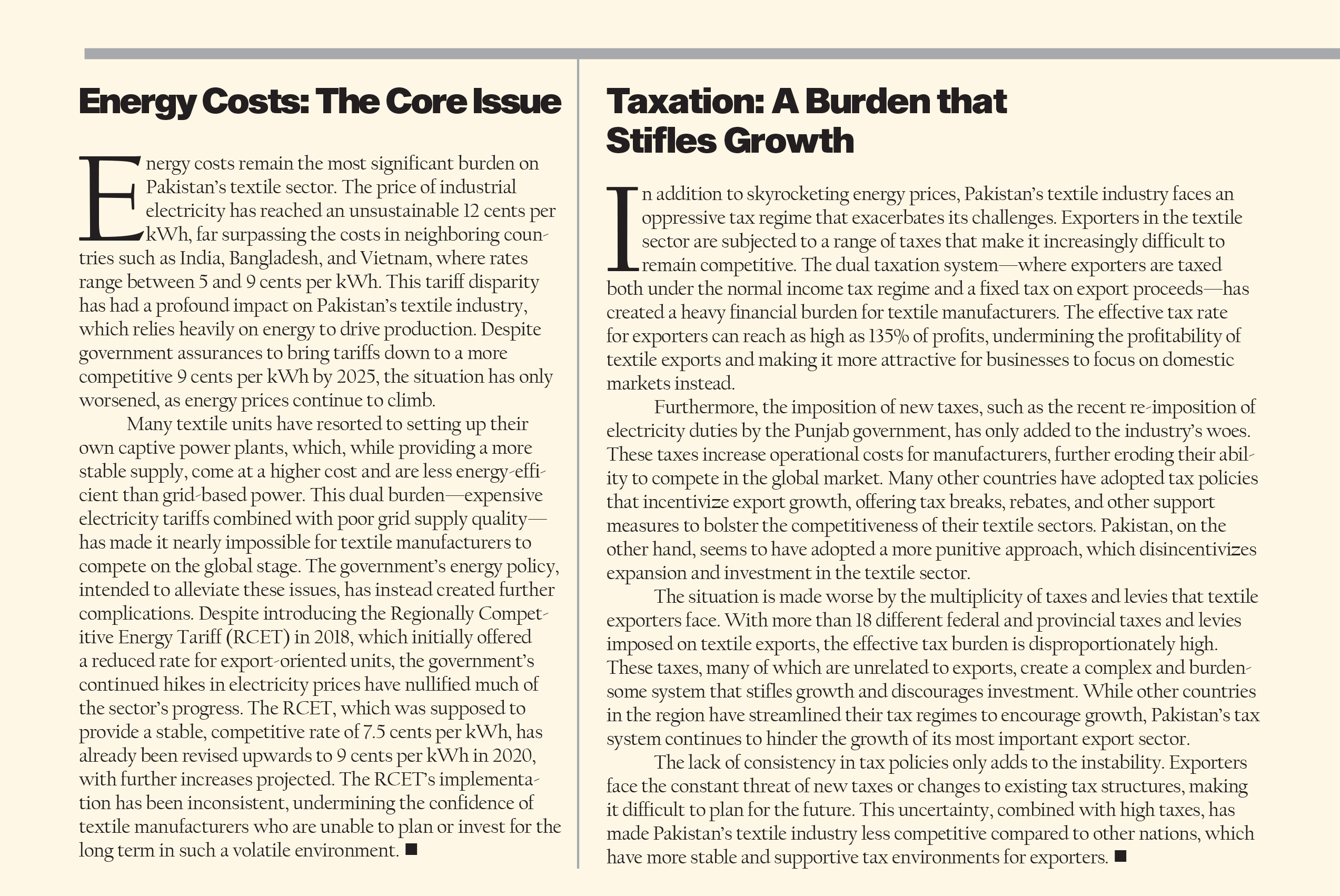
While the export challenges are clear, taxation and the retail sector represent additional hurdles that need to be addressed for Pakistan’s textile industry to thrive. The tax system in Pakistan has long been a point of contention for textile manufacturers. As Raza Baqir points out, the textile industry in Pakistan faces a tax rate that can exceed 50% when considering the combined effects of export taxes, fixed taxation regimes, and contributions to various social funds.The high tax burden, coupled with delays in tax refunds, has placed textile manufacturers at a severe disadvantage.
A major reform in the tax system is urgently needed. Pakistan’s tax collection rate, which remains below 10% of GDP, is one of the lowest in the region. Instead of squeezing the already taxed businesses, the government should focus on broadening the tax base and improving tax collection efficiency. By providing tax rebates or exemptions for textile exporters, the government can help ensure that the industry remains competitive on the global stage. Timely tax refunds would also help ease the cash flow issues that many textile manufacturers face, allowing them to reinvest in their businesses and expand their operations.
The taxation challenges are exacerbated by the lack of infrastructure support for retail businesses. While brands like Cross Stitch have made significant inroads in the domestic market, there is a clear need for better retail infrastructure to support the growth of textile brands. As Asad Shafi explains, the ability to scale local brands into global markets depends on the infrastructure available within Pakistan. “We need the infrastructure to take our brands to international markets,” he says. The government can help by creating retail parks, offering logistical support, and facilitating access to international retail channels.
In addition to supporting retail infrastructure, the government must also address the issue of informal businesses that avoid tax compliance. Small-scale retailers often operate cash-based businesses, evading taxes and creating an uneven playing field for larger, registered companies. This undermines the formal retail sector and discourages investment in the textile industry. The government must prioritize formalizing the retail sector, enforcing tax compliance, and ensuring that all businesses contribute to the economy.
Despite these challenges, there are success stories that highlight the potential of the retail sector. Pakistan has a growing demand for locally made, high-quality textiles, and this market can be the stepping stone for textile companies to expand internationally. However, to fully capitalize on this potential, the government must ensure that retailers have access to affordable financing, modern retail infrastructure, and favorable tax policies. By leveling the playing field and providing the necessary support, Pakistan’s textile industry can foster a competitive retail sector that will drive growth in both domestic and export markets.
The potential is there
The challenges facing Pakistan’s textile industry may be daunting, but the potential for revival remains strong. With a rich history of textile production stretching back thousands of years, Pakistan has the resources, talent, and capacity to once again become a global textile powerhouse. However, this requires urgent and sustained intervention from the government, as well as a concerted effort from textile mills to modernize, innovate, and diversify their offerings.
The experiences of countries like Bangladesh, which has managed to carve out a significant share of the global textile market despite facing similar challenges, offer valuable lessons. By adopting consistent, pro-business policies, investing in energy infrastructure, and supporting value-added production, Bangladesh has been able to increase its textile exports exponentially. Pakistan can follow suit by focusing on policy consistency, addressing energy issues, and fostering a supportive tax and retail environment.
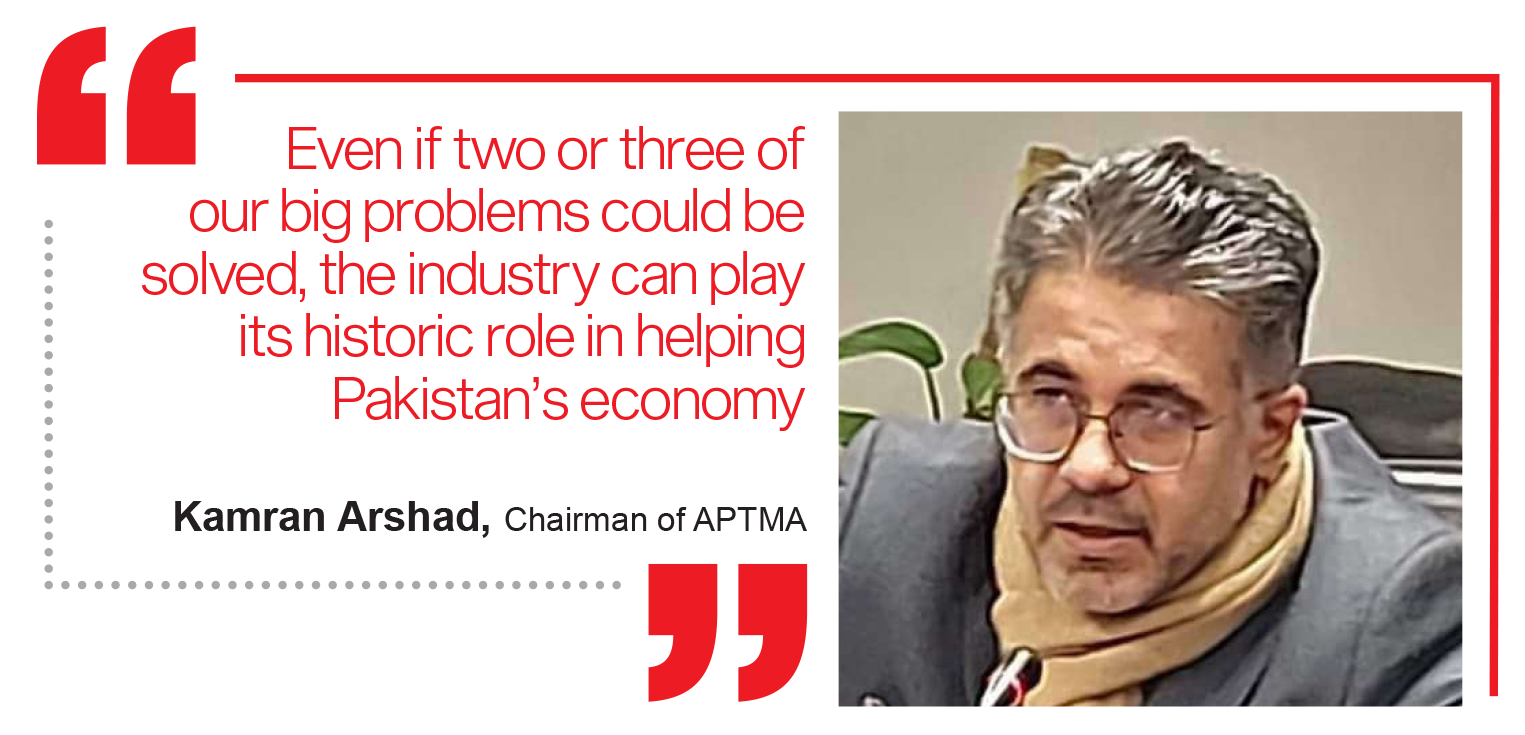
Kamran Arshad, Chairman of APTMA, encapsulates the industry's hopes when he says, “Even if two or three of our big problems could be solved, the industry can play its historic role in helping Pakistan’s economy.” With the right policies, stable energy prices, and a focused effort on export and retail growth, Pakistan’s textile industry can once again thrive and take its rightful place in this country’s economy.
Abdullah Niazi is senior editor at Profit. He can be reached at [email protected]
View all articles →6 Comments
No comments yet. Be the first to join the discussion!