Can Pakistan’s snack giants make the best of our trade troubles?

The potato chips industry doesn’t appear to be slowing down anytime soon. The key players remain mainly the same, but the projected growth in the near future has implications for the future of local potato production
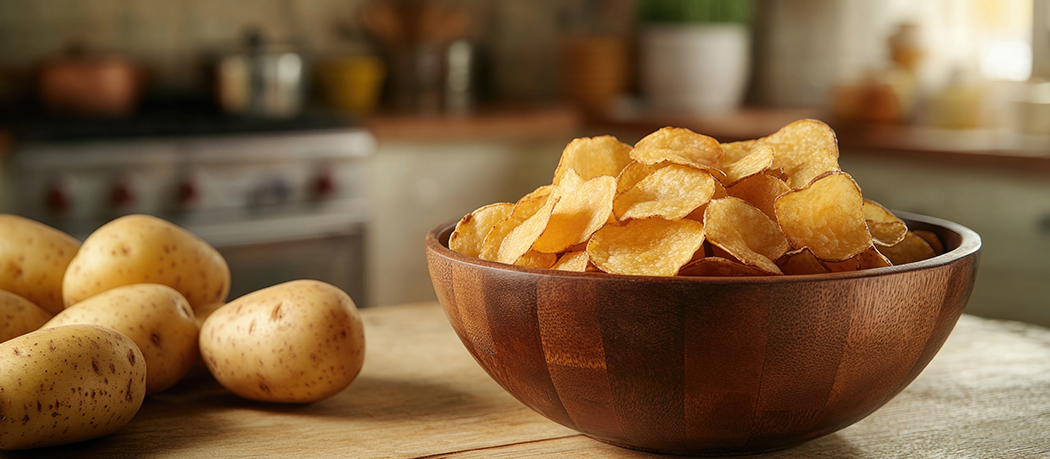
There is nothing that quite matches the versatility of the humble potato. It goes with anything. You can have it in different textures, soft, hard, in-between. It tastes good in broths, it tastes good fried, it tastes good mashed. According to some, it even tastes good in biryani. It is like that annoying cousin whose qualities your parents just won’t stop brandishing in your face. Perhaps that’s the reason that in the popular rhyme Aaloo Kachaloo Miyan, the mean eggplant has had enough and thinks well to land a hefty kick on the unsuspecting potato miyan.

No wonder then that potato is a staple in so many diets. But its ubiquity in the Pakistani pantry is not as inevitable a thing as might have been supposed. In fact, potatoes aren’t even native to the Indian subcontinent. They were brought here from Peru by Dutch settlers in the late 17th century, and planted on the Malabar coast. And at the time of partition, most of the potato in the subcontinent was being produced on the Indian side. Even so, after partition, the potato didn’t take too long to take over local production and become Pakistan’s largest vegetable crop by area and production.

So much so that in a country where the most prevalent conversation in the agriculture sector is about yields, we have a different problem when it comes to potatoes: we grow simply too many. This year, potato production rose to 9.9 million tonnes, almost 44% higher than official projections, making it the 9th largest producer of potatoes globally. Driven largely by Punjab – which accounts for around 98% of the country’s total output – this rising production is used primarily to satisfy local demand. The surplus is exported to destinations such as Afghanistan, Sri Lanka, UAE, Qatar, Oman, Saudi Arabia, and Malaysia.

While this might sound like good news, Pakistan’s agri supply lines had barely managed to deal with last year’s bumper crop when this year’s even bigger bumper crop showed up. As a result, Pakistan’s potato market is currently in the middle of a crash because of over production. The previous stock is being loaded into the market at prices barely able to cover the costs of their storage and transportation. And the new stock is being sold at prices lower than last year’s.

While this is good for food security, there is simply not enough demand to meet the production. One reason is the ongoing tension on the Afghan border. Over-production of potatoes is a regular occurrence in Pakistan’s agricultural cycle, but farmers end up still making a profit because they simply send them across the Torkham border. Afghanistan has traditionally been the biggest market of Pakistani potatoes. In 2024, exports to Afghanistan accounted for about 42% of the total volume. The closing of the border also has barricaded the potato way to central Asia and Russia, not inconsiderable markets for Pakistan.

While an easing of tensions with Afghanistan will make the potato market go back to its old ways, there are some interesting possibilities that arise from this entire scenario. Most of the potatoes produced by Pakistan are used by households. The consumption rises sharply during Ramadan, as famished fasters look brazenly in the eyes of heartburn and cholesterol, as they gorge on pakoras, samosas, cutlets, and myriad other forms of the potato.

Yet, there is another player, which though relatively minor, dominates the racks at the neighbourhood khokhas and kiryana stores, as well as the billboards around you and your TV screens in your homes. It is the elliptical, crunchy, and flavourful potato chip.

Last year, the potato chip market in Pakistan had a retail value of over Rs 270 billion. Going by the trajectory of the last decade and market prediction, it is expected to rise in value to Rs 690 billion by the year 2030. The biggest player in this with half the market share is PepsiCo, which has dominated with its Lays brand of chips. Of course, the entry of Lays in Pakistan’s market is over a decade old. But in the time since it has hit the scene, Lays has thwarted local competition, gained ground, increased the size of the market and dominated in every way possible. That has not stopped local competitors from rising and trying to take them on. Not only have there been major attempts at usurping Lays (United’s Oye Hoye comes to mind), even older players like Super Crisp have tried and in some ways succeeded to get a  bit of market share back from the giant MNC. With a core input cost that is over supplied, how has this business evolved, and can some of the local players cash in on the increased cost cutting opportunities of this year’s trade problems with Afghanistan? 

Complex carbohydrate, complex problems

The brass tacks of this are simple. Pakistan produces so many potatoes that not only are they found in kitchens and pantries across the country, chip makers use local potatoes for production as well. Even an MNC like PepsiCo with its stringent requirements uses all Pakistani potatoes. This might not sound particularly impressive, but it is when you consider only about 5% of the potatoes grown in Pakistan are suitable for commercial processing. 

Now, potato chip makers will tell you this means they only use the best quality potatoes. This isn’t strictly true. Quality in this case is a bit subjective. A particularly starchy potato won’t make for good crisping, but it might make for good mashing or stewing. 

But what makes a potato industrial grade? What determines its fate?

A potato has two major ingredients, water and dry matter. Dry matter is composed mostly of starch, a complex carbohydrate. It is the extent of dry matter content which is the most important factor in determining what is to be done with the potato. While table varieties of potatoes have only around 15% of dry matter, industrial processing into crisps requires a higher percentage of dry matter content. This figure is usually around 20%, though the ideal dry matter content percentage is 22.

Other than that, these crisp-fated potatoes must be medium-sized and have low levels of reducing sugar contents and no asparagine content. At the same time, they must look good upon frying, be the right tasteful colour and hold shape, and have the durability to survive long storage times. The farmers that grow them specifically grow them for chip making companies. The biggest proponent in this has also been PepsiCo. 

The most commonly used of these varieties in Pakistan is called Lady Rosetta. Initially introduced in Pakistan by PepsiCo, this variety has since been taken up by local farmers because the local industrial demand kept rising, and it started making financial sense to produce these. Other than Lady Rosetta, the following crisp-suitable potato varieties are cultivated in Pakistan: Lady Jo, Lady Claire, and Hermes.

The State of the Potato Chips Industry

The potato chips industry falls in the broader category of savoury snacks. And this broader category is growing fast according to a recent report by Euromonitor from earlier this year. 

If we look at the growth in terms of value, whereas in 2020, the total value of these snacks sold was Rs 79 billion, by 2025, this had increased by 250% and reached Rs 278 billion. A big reason for this monumental increase, of course, can be attributed to inflation. However, even in terms of volume the chips market has been thriving. While prices may have increased, people have regularly bought more potato chips and savoury snacks.In the five-year period from 2020 to 2025, the savoury snacks category grew 41% in terms of volume from around 92 thousand tonnes to around 130 thousand tonnes.

Some of this latter growth could be attributed to the increase in prices, with rupee devaluing, but the general trend of growth seems indisputable. And this trend is projected to continue, with estimates that retail sales would reach Rs 690 billion by 2030. Stable economic growth, advancements in supply chain, as well as rising convenience of buying these are projected to be the key drivers of this growth.

The undisputed market chief of the savoury snacks industry is PepsiCo, whose share in the total retail value sold in 2025 was around 52%. PepsiCo is followed by Triple-Em and KS Sulemanji Esmailji & Sons, accounting respectively for 7.6% and 7.5% of the market in 2025. Triple-Em is the company that makes Super Crisps and KS Sulemanji is the company that produces Slanty. These are trailed by Ismail Industries and Dalda foods, with 2.1% and 1.6% market shares respectively with their own less well known brands.

If we look at the potato crisps category in particular, between 2020 and 2025, sales by volume rose from 41 thousand tonnes in 2020 to just over 65 thousand tonnes in 2025, an almost 60% increase. By sales value, this category grew 288%, from Rs 45.8 billion to PKR 178 billion over the same period. 

As far as the brands are concerned, if we look at potato chips brands as parts of the broader savoury snacks category, the king was PepsiCo’s Lays, with a 40.4% market share. No one even came close. Tripple-Em’s Super Crisp trailed Lays by 3.7%, and was followed closely by Ismail Industries’ Snackcity Kurleez at 2.1%. Dalda Foods’ Knockout accounted for around 1.6% of the market.

We can see how PepsiCo leads, both as the manufacturer and with its Lays brand, the potato crisps – and the broader savoury snacks – market. Lays is almost synonymous with potato chips the world over. Originally started as Lays in the US, it merged with the Frito company to become Frito-Lay, which merged with Pepsi-Cola in 1965 to become PepsiCo. Lays, therefore, is a key part of the PepsiCo brand.

In Pakistan, PepsiCo launched the Frito-Lay (snacks) division in 2006. Its rise was meteoric, and it soon came to dominate the market through its potato chips brand Lays, and corn-based savoury brands like Cheetos and Kurkure. For Lays, locally sourced potatoes are used, and the product is exported to foreign markets such as Qatar and Afghanistan. There are plans to launch Pakistan-manufactured Lays in South Africa and Malaysia as well.

There are three main factors for Lays’ prime position in the local potato chips market. The first is product innovation and quality. Put simply, they taste good, often introduce new flavours that cater to local tastes (think Barbecue, Tikka, Masala), and maintain consistent quality.

The second major factor is PepsiCo’s extensive distribution network. Leveraging their extensive network for the supply of Pepsi cola, Pepsi has built up a strong supply chain ranging from granular access to the lowest level retail actors to massive supermarket chains. With a strong dealer network, incentivized by the MNC’s ability to offer great profit margins, the product is always in the market. You don’t have to go around looking for it.

Last, but not the least, is marketing and brand visibility. Building on PepsiCo’s illustrious history of developing and marketing brands, Lays has been part of well-coordinated campaigns, online and offline, often coming with endorsements from celebrities like the fast-bowling ace Wasim Akram. All this keeps Lays in the eye of the consumer, and builds an aura of trust around the yellow and red Lays’ logo.

These three factors together actually seem to be the necessary conditions of growth in this sector, whether Lays or not. The story of Oye Hoye serves as a counterpoint to prove this.

Launched in 2016 in Lahore by United Snacks, Oye Hoye rapidly rose as one of the most visible and widely available potato chips brands in Pakistan. In fact, if we look at potato consumption by potato chips brands, in 2017, Oye Hoye processed 10,000 tonnes of potatoes, which was just under 5% of the total potatoes processed by all chip manufacturers.

Yet now, Oye Hoye is all but non-existent. It had run well-publicised advertisement campaigns. Fawad Khan was its face. It even tasted good, and had developed multiple strong flavours. But what primarily caused Oye Hoye’s downfall were shortcomings in its supply chain. It couldn’t compete with brands such as Lays and their strong distributor networks. It didn’t have enough delivery vans – with the product being sometimes unavailable in the market – and couldn’t offer as good margins to the dealers as its multinational competitor could. It couldn’t get prime placement in grocery shops. It was there it was beaten, and there that it fizzled out.

Recent Trends

If we look at the past five years’ data for potato chips manufacturers in the broader savoury snacks industry, however, we can see that PepsiCo actually lost some of its market share in terms of retail value.

In 2021, PepsiCo generated over 58% of the total retail value within the savory snacks category. In 2025, this figure was just under 52%.

Yet in the same time period, Tripple-Em’s share rose from 1.4% to 7.6%. Although some other major manufacturers also gained – KS Sulemanji Esmaili & Sons from 7.2% to 7.6%, Ismail Industries from 1.7% to 2.1%, and Dalda Foods from 0.6% to 1.6% – it appears that the greatest dent in PepsiCo’s share was made by Triple-Em.  

Some of this can likely be attributed to the recent Boycott, Divest, Sanction (BDS) movement that caught steam in Pakistan when Israel’s bombardment in Gaza, which has now been declared a genocide by all the relevant organsations, began. The effects of the boycott movement have been clear on other segments as well. In an earlier story, Profit reported a 40% dip in the sales of fast food franchises like McDonalds. While these have recovered following a peace deal and an aggressive campaign by the fast food chains to price down and fix the image issue, the problem has remained sticky in other segments. In the same report, Profit talked about how the BDS movement had caused an overall dip of more than 20% in sales of carbonated soft drinks. While local competitors made up some of the difference, they were not prepared to handle the shift. Consumers, however, reacted by simply not drinking carbonated soft drinks anymore. 

One wonders if the change would have been more drastic had Oye Hoye entered the market a few years later. 

Read more: Coke and Pepsi (To name just a few) took a hit from the BDS Boycott movement

Of course, there might be more to this than a simple zero-sum game, especially given we have the data of retail value and the retail value is determined by pricing. And both might have had different pricing strategies, for example. However, it is still a good view of how the industry is shifting, with local brands trying ever to rise from under the shadow of PepsiCo.

As far as the distribution framework for these chips manufacturers is concerned, we see that almost all the savoury snacks are sold through offline retail. In 2020, offline retail accounted for 99.8% of the retail value of all savoury snacks sold. By 2025, this figure had seen a nominal reduction to 99.5%. So, it is still the main channel by far where you can get your hands on a pack of potato crisps.

Now, offline retail has two main sub-categories: grocery retailers (such as convenience stores, super and hypermarkets, tobacco shops, local grocers, etc.) and non-grocery retailers (such as health and beauty stores, general merchandise stores, and so on). According to the data, grocery retailers make the overwhelming majority of total sales value of the savoury snacks sold. However, like the general category of offline retail, their numbers have seen a slight decline between 2020 and 2025, from 98.5% to 94.5.

This is the primary channel used by major manufacturers such as PepsiCo, Ismail Industries, and Tripple-Em to expand their reach to the widest possible customer range. Their efficient and well-established supply chain networks enable them to optimize stock levels, reduce shortages, and maintain consistent product availability across even remote locations.

Yet what is interesting in this category of grocery retailers is the distribution among its various types. In 2020, this was dominated by small local grocers, making up 87.4% of the market share. Yet by 2025, their share had reduced to a still substantial 80.3%. Conversely, the shares of supermarkets and hypermarkets both increased over this time. For the former, the rise was from 2.9% to 5.3%, almost a doubling. For the latter, it rose by more than double, from 1.6% to 3.6%. So, we can see an obvious, though slight, shift from local grocers to super and hypermarkets. Part of the reason is the shift in lifestyles, with consumer preferences shifting to a single organised, one-stop shopping experience. At the same time, these markets offer better visibility for brands, while offering a greater array of options for the consumer.

E-commerce retail, on the other hand, made up a very small share, though it too gained in the previous 5 years, rising from 0.2% to 0.5%. Yet, it appears to be the fastest growing category. Driven primarily by an increase in online grocery platforms, as well as the increasing convenience of online delivery channels, it has seen its greatest increase with young people, who are more willing to try niche brands such online platforms might offer.

 Where things go 

Whatever pan outs in the coming years, one thing seems fairly certain: the consumption of these potato chips doesn’t appear to be declining any time soon. Yet, as we saw earlier, the overwhelming majority of locally produced varieties of potato aren’t suitable for industrial processing into these chips. Only 5% or so make the cut.

Currently, Pakistan imports potato seed, which is used mostly to produce the industrial grade varieties fuelling the potato chips industry. In 2021, the total potato seeds imported were worth around USD 12 million, and the demand for the import of these seeds keeps growing on the back of the rising demand of industrial grade potato varieties, fuelled partly by the potato processing companies to make fries and chips.

In order to fuel this rising demand, the area planted of these potato varieties must be increased. At the same time, one way to sustainably increase and facilitate the growth of these crisp-worthy potatoes is by developing some local varieties and incentivising their production by local farmers. The current level of production of these types will not be enough to match the forecasted demand.

But, at the same time, if we go back to where we started, we are producing a surplus of potatoes. Part of the market crash this year, as we saw, is the closure of the Pakistan-Afghanistan border. Of course, potato is one of the crops we export, and plays a key part in helping offset – for whatever it’s worth – Pakistan’s gargantuan trade deficit. 

Yet, this incentive to export potatoes must be balanced in the near future against the pressure to import potato seeds for these varieties driven by the surging demand for potatoes, both in the household and in the processing industry. In fact, doing this might open new opportunities to improve the general economic situation. Rising investment in the local production of these industrial grade varieties might at one stage, for example, even open a new opportunity for the export of both these more vaunted varieties of potatoes as well as locally produced potato snacks. 

Usama Liaqat
Usama Liaqat
Usama is a staff member and can be reached at [email protected]

LEAVE A REPLY

Please enter your comment!
Please enter your name here

Popular Posts