Monday, December 22, 2025

Systems’ acquisition of Confiz to be a share swap

Company continues rapid revenue growth and margin expansion with export sales, though risks to margins from stable rupee remain a concern

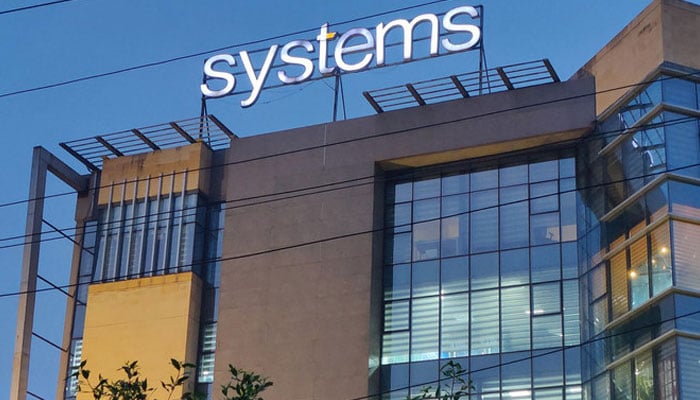
Systems Ltd’s latest results underline a familiar story for Pakistan’s largest listed IT exporter: strong top-line momentum driven by overseas clients, paired with constant margin-management work as local costs rise and currency tailwinds fade.

At the nine-month mark of calendar 2025, management told analysts the company posted profit after tax of Rs7.94 billion (EPS Rs5.42), up 46% year-on-year, while 3QCY25 profit after tax rose 28% YoY to Rs2.79 billion (EPS about Rs1.9). The quarter’s improvement was attributed to higher technology services exports and better gross margins.

The detailed quarterly picture in the briefing notes shows 3QCY25 net sales of Rs20.68 billion (up 20% YoY) and a sharp improvement in gross margin to 30%, versus 25% in the same quarter last year. Operating profit for the quarter climbed 47% YoY, while EBITDA rose 44% YoY, supporting the view that Systems is still expanding profitability as it scales export delivery.

But the most market-moving disclosure from the briefing was not in the income statement – it was in the fine print around Systems’ planned acquisition of Confiz.

Management clarified that the Confiz transaction will be executed as a 100% share swap, with no cash consideration from Systems, meaning the company will not deploy balance-sheet cash to fund the acquisition. The deal is expected to be implemented through a court-approved scheme of arrangement, with an indicative timeline of roughly three months for regulatory and court approvals and a targeted consolidation date from January of the following year.

Systems expects to issue roughly 3.8%–4.0% new shares to complete the transaction – implying around 4% dilution for existing shareholders – while Confiz is described as about 10% of Systems’ size in revenue and profitability terms. Confiz is also expected to retain sufficient working capital to continue operations without requiring additional funding from Systems.

Strategically, management positioned Confiz as a way to deepen Systems’ access to the Microsoft ecosystem and accelerate growth in the US, UK and Europe, while creating cross-sell opportunities into Confiz’s client base (where SAP, Salesforce and other enterprise platforms have historically been less prominent).

Still, management also flagged the perennial exporter risk: with around 90% of revenue USD-linked, margins can come under pressure if the rupee appreciates or stays stable for prolonged periods, particularly while wages and other domestic costs keep rising.

Systems is one of the few Pakistani corporate names that can credibly claim to have built a global technology business from Pakistan over decades, not years. The company was incorporated in 1977 and is listed on the Pakistan Stock Exchange; its core activities include software development, trading of software, and business process outsourcing services.

In its filing accompanying the FY2024 results, Systems described its revenue engine as being anchored in Digital/Data/Cloud Services, managed services, consulting, IT outsourcing and BPO/contact centre services. It also disclosed that approximately 87% of revenue comes from exports across North America, Europe, the Middle East and Asia Pacific, with the remaining 13% from Pakistan.

Those export markets are not simply “nice-to-have” diversification – they are central to Systems’ growth model and cost structure. The same FY2024 filing shows revenue currency composition dominated by the US dollar (about 90%), a fact that explains why the direction of the rupee can materially influence reported profitability.

That sensitivity was visible in FY2024: while Systems’ consolidated revenue rose 26% to Rs67.47 billion, the company said profit declined mainly due to an exchange loss versus a large exchange gain the year before – highlighting how currency can swing bottom-line performance even when operations are expanding.

Operationally, Systems has been using acquisitions to build deeper vertical capabilities and to extend its geographical reach – an approach management reiterated in the analyst briefing, noting it continues to evaluate M&A opportunities that can accelerate expansion particularly in the US and UK. The same briefing also referenced the company’s recent “BAT-related” transaction (a specialised shared services/BPO vertical) as having commenced operations smoothly, reinforcing that Systems is trying to climb the value chain rather than competing purely on low-end outsourcing.

Systems’ importance in Pakistan’s corporate landscape is partly symbolic and partly measurable.

Symbolically, it is one of the country’s best-known examples of a tech business that has translated local engineering talent into sustained export revenues – an outcome policymakers frequently cite when advocating for IT exports as a stable source of foreign exchange.

Measurably, Systems is Pakistan’s largest listed IT services company by scale and is widely regarded as a bellwether for the country’s broader IT export narrative. Its PSX profile places it in the Technology & Communication segment and describes it as a public company principally engaged in software development and BPO.

On the delivery side, Systems is also deeply embedded in global vendor ecosystems. Microsoft, for example, has profiled Systems as a long-standing partner (since 2012) with multiple cloud competencies, and describes it as diversified across BPO, application development, data integration, and cloud and digital services. That is the context in which the Confiz acquisition – also framed as strengthening cloud, data and AI modernisation capabilities in higher-value markets – fits into a longer strategy rather than a one-off corporate action.

The key question for investors now is whether Systems can keep widening margins as it scales exports – particularly if the rupee remains stable and wage inflation persists. Management says it is exiting loss-making contracts and prioritising “higher-margin” sustainable growth, while continuing to hunt for inorganic opportunities. In the near term, Confiz’s contribution – largely in North America and Europe, with higher revenue per employee – could help. But the structural test remains familiar: in Pakistan’s IT export model, execution matters, and currency never stays quiet for long.

LEAVE A REPLY

Please enter your comment!
Please enter your name here

[adinserter name="_av_sidebar_top"]

Popular Posts

[adinserter name="_av_sidebar_bottom"]