Jaecoo launch expected to significantly boost Nishat Group earnings

The competitively priced Chinese SUV has seen strong interest at the pre-booking phase and is expected gain significant share after launch
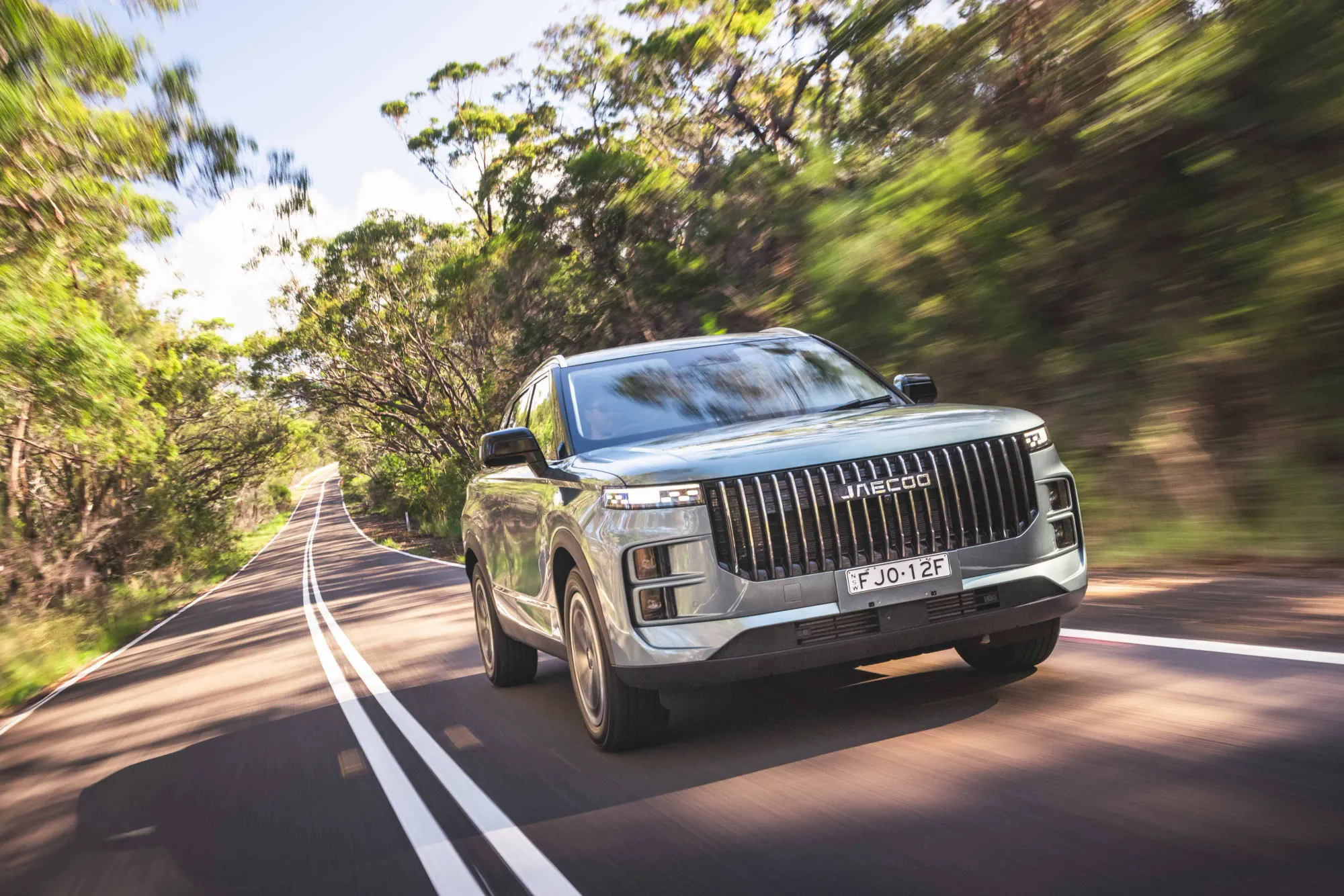
Pakistan’s car market has become used to “launch hype”, but the early response to the Jaecoo J7 appears to be translating into something more tangible: bookings at a scale that can materially move earnings for the listed members of the Nishat Group.

NexGen Auto, the Nishat-backed venture that has partnered with China’s Chery Automobile, announced the arrival of the Jaecoo and Omoda marques in October 2025. The Jaecoo J7 was introduced at Rs9.99 million, before being revised to Rs10.5 million effective 1 December 2025. That pricing matters, because it places the model squarely in the heart of the rapidly expanding SUV/crossover battleground – expensive enough to signal “premium”, but not so expensive that it becomes a niche import-like indulgence.

In its first month, the company cited 3,000 units booked – the highest first-month Jaecoo booking volume in any country, based on an official newspaper advertisement. Put simply, the pre-booking phase has functioned as a market test, and consumers appear to have answered loudly.

The operational implications show up in delivery timelines. With the J7 carrying a delivery time of roughly 3–4 months, this signals monthly production in the range of 700–800 units. For buyers, that means the “new normal” in Pakistan’s auto market is continuing: waiting still exists, but it is no longer the multi-quarter ordeal that once made “own money” a parallel pricing system. For the Nishat Group, it suggests something even more important – NexGen Auto may be moving quickly from “brand launch” to “volume ramp”.

There is also a competitive point embedded in how the car is being positioned. Equity research analysts at Topline Securities, an investment bank, argue that the J7 is not primarily targeting Haval’s higher-tier SUVs; rather, it is competing more aggressively with “lower-tier SUVs such as the Corolla Cross and other petrol variants”, with the J7 described as smaller than a Haval H6 but slightly bigger than a Corolla Cross. The J7 is priced at Rs10.5 million versus Rs7.9 million for the Corolla Cross and Rs12.9 million for the Haval H6. That is a deliberate “mid-point” strategy: offer size and features that feel like an upgrade from mainstream crossovers, while undercutting the more expensive end of the Chinese-SUV spectrum.

NexGen Auto is not listed, but its cap table makes it highly relevant for public market investors. Two cash-rich, publicly listed IPPs – Nishat Power Ltd (NPL) and Nishat Chunian Power Ltd (NCPL) – each hold 33% equity in NexGen Auto, according to the research note. Nishat Mills Ltd (NML), the flagship listed holding within the broader group, sits above them: NML owns 51% of NPL and 24% of NCPL. In other words, the economic exposure to the Jaecoo ramp-up is already “wired into” listed entities that investors can buy on the PSX.

Topline estimates that 800 units per month in FY27 and gross margins of 18% would translate into incremental EPS of Rs6.77/share for NPL and Rs6.52/share for NCPL.

Why does this matter so much for two power companies? Because their existing investment profile is unusually conservative by Pakistan standards. Topline describes both NPL and NCPL as “cash rich” following cash receipts linked to power-sector circular debt resolution, with net cash cited at Rs16 billion for NPL and Rs10 billion for NCPL. Both companies are investing Rs2 billion each in this auto business.

The strategic logic is easy to read: mature IPPs have faced questions globally about growth, contract durability, and long-term reinvestment opportunities. In Pakistan, where power-sector receivables and circular debt dynamics can distort cash flows, an auto venture that can scale quickly – especially one benefiting from a market-wide pivot towards SUVs – offers an alternative growth runway.

The Nishat Group is not new to automotive assembly. Its Hyundai partnership – Hyundai Nishat Motor (Pvt) Ltd – has already shown that the group can navigate the regulatory, localisation, and dealer-network challenges that define Pakistan’s auto industry.

Hyundai Nishat describes itself as a Nishat Group company and a joint venture involving Nishat Group, Japan’s Sojitz Corporation and Millat Tractors, with Hyundai Motor Company as the partner for manufacturing, marketing and distribution of Hyundai’s product line in Pakistan. The venture began assembling locally within a few years of its greenfield push; Hyundai Nishat’s own communications around its Faisalabad facility highlight the start of local production and the broader ambition to expand the model line-up over time.

This matters for NexGen Auto for two reasons. First, NexGen Auto is assembling vehicles through toll manufacturing with Hyundai Nishat while also planning to invest Rs14.7 billion in working capital and development of its assembling facility (including a paint shop and other elements). That suggests a phased industrial strategy: use existing manufacturing infrastructure and operational expertise to get to market quickly, while building out dedicated capacity and deeper localisation later.

Second, the existence of Hyundai Nishat provides a ready reference point for how Nishat approaches the auto sector: partner with a global OEM, invest in manufacturing capability, and build the distribution footprint. NexGen Auto’s parallel partnership with Chery – through its export-focused Omoda and Jaecoo marques – fits that playbook.

Chery has become one of the most aggressive Chinese OEMs in global expansion, and its recent growth provides context for why Pakistani assemblers and groups are eager to align with it.

Reuters reported that Chery’s global sales rose 38.4% in 2024 to 2.6 million vehicles, with revenue rising sharply as well, and exports reaching about 1.14 million – maintaining its position as China’s top car exporter. Chery’s own international-facing communications echo the same arc, highlighting total sales above 2.6 million and exports above 1.14 million in 2024, alongside rapid growth in new-energy vehicles (NEVs).

Omoda and Jaecoo, in turn, are not random sub-brands. They are designed as export-oriented marques. Public brand descriptions note that Omoda and Jaecoo are sister brands owned by Chery and marketed outside China as part of its export strategy, often sharing dealer channels in many markets. This is important for Pakistan: it means the product pipeline, the brand positioning, and the right-hand-drive/market adaptation capabilities are being built with international markets in mind – rather than Pakistan being an afterthought.

In practical terms, it is also why the J7 arrives with a “feature-forward” value proposition. Pakistan’s SUV consumers increasingly compare not just price and engine displacement, but infotainment, safety kits, hybrid systems, warranty packages, and dealership experience. In that environment, a Chery export brand can compete by over-delivering on perceived specifications relative to traditional incumbents.

The Jaecoo story is ultimately a story about the market shifting under the feet of the incumbents.

First, SUVs are now the centre of gravity. Research based on PAMA figures has pointed to SUVs outpacing overall passenger vehicle growth in FY2025, with SUV sales growing materially faster than the broader passenger vehicle segment.

Second, the “Big Three” Japanese dominance has been diluted by new entrants – especially Chinese and Korean-backed assemblers. The market has moved from assembler-oriented to consumer-oriented, and the long-standing dominance of the older Japanese players was “left behind” a few years ago as new companies and models arrived.

Third, competition has improved the buying experience. A decade ago, in many segments the consumer experience was defined by rationed supply. Wait times could stretch for months, and delivery dates were often uncertain. Those days – when cars were available “at own money” with significant delivery times – have faded, with manufacturers now offering discounts or instalment plans, plus add-ons such as extended warranties and maintenance packages.

To understand what “own money” meant in economic terms, it helps to look at how policy researchers have described it. Pakistan Institute of Development Economics (PIDE) characterised “own money” as a premium charged by dealers over and above the official price for quicker delivery, enabled by artificial shortages and speculative pre-bookings. Business Recorder reporting has documented how these premiums could become large relative to sticker prices during high-shortage periods.

That system thrived when a handful of assemblers controlled supply and model choice was limited. But as the market has diversified – with SUVs exploding in popularity and consumers becoming more willing to consider Chinese badges – the bargaining power has shifted. The result is exactly what the Topline note describes: a market that looks more like a competitive consumer sector, with pricing campaigns, financing, warranty bundles, and faster fulfilment becoming tools to win market share.

In this setting, the Jaecoo J7 is not just “another launch”. It is a test case for whether a Nishat-backed assembler, using a Chery export brand and leveraging existing manufacturing capabilities, can capture meaningful SUV share quickly enough to create a new earnings pillar for listed group entities.

If the booking momentum holds – and if the production ramp implied by 3–4 month delivery times sustains – Nishat Power and Nishat Chunian Power may find themselves in an unusual position for IPPs: discussing model mix, margins, and dealer throughput alongside kilowatt-hours. And that is precisely why equity analysts are framing the Jaecoo launch as an earnings catalyst rather than simply an automotive curiosity.

LEAVE A REPLY

Please enter your comment!
Please enter your name here

Popular Posts