Tag: forex

  • SBP digitises forex regulatory approval system

    SBP digitises forex regulatory approval system

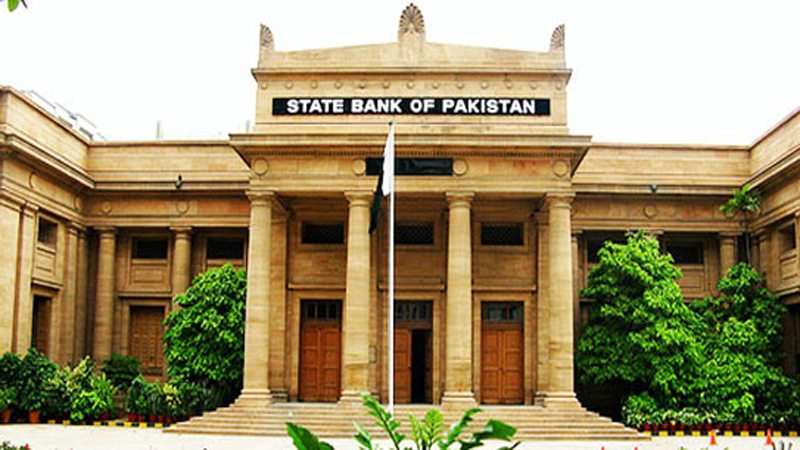
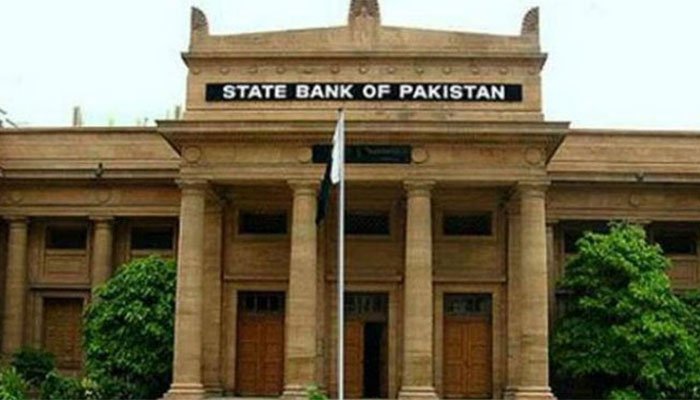
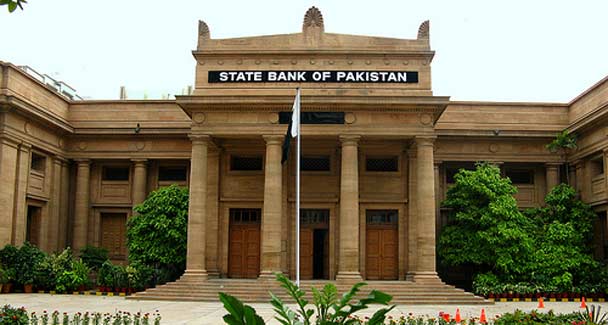
    The State Bank of Pakistan (SBP) has completed digitisation of the regulatory approval system for foreign exchange cases aiming to support ease of doing business.

    “The SBP initiated the project of ‘End-to-End Digitalisation of FX Cases’ with an objective to enhance ease of doing business by providing a fully digitalised platform to business community and individuals approaching banks for their foreign exchange related requests to SBP,” said the central bank on Monday. The project was divided into two phases.

    In the first phase, banks were linked with ‘SBP FX Regulatory Approval System (RAS)’ on March 24, 2020; which enabled banks to submit FX related cases electronically for regulatory approval of SBP and SBP-Banking Services Corporation (BSC). In the second, the central bank further extended the facilitation to the business community, whereby the banks developed portals to digitally receive forex cases from their clients for processing.

    “This initiative significantly enhanced operational efficiency and resulted in cost reduction, improved transparency and led to faster decision making at SBP and banks,” it added.

    “Since the launch of the system, a total of 59,176 forex cases have been submitted digitally by the banks —instead of paper-based submission — through RAS till July 31, 2021,” it added.

  • Hyderabad-Sukkur Motorway among 10 projects approved by ECNEC

    Hyderabad-Sukkur Motorway among 10 projects approved by ECNEC

    ISLAMABAD: The Executive Committee of the National Economic Council (ECNEC) on Wednesday approved 10 development projects, including the Hyderabad-Sukkur Motorway, worth Rs361.5 billion.

    A meeting of ECNEC, presided over by Finance Minister Shaukat Tarin through video link, approved the construction of the 306km Hyderabad-Sukkur six-lane-divided, fenced motorway on a build, operate and transfer (BOT) basis at a revised cost of Rs191.471bn.

    The project would be included in the next federal budget.

    It is to be implemented on the BOT user-charge basis with the provision of significantly higher financial contribution by the federal government through a capital and operational viability gap fund (VGF) to improve the financial viability of the project.

    The project is expected to be completed in 30 months.

    As of April 12, the Public-Private Partnership Authority (P3A) was proposing Rs76bn government funding, or almost 39 per cent share, which has now been increased to almost 50pc. The BOT is practically now on 50:50 shareholding from the public and private sectors.

    The P3A board of directors had approved the provision of Rs92bn from the budget and through toll charges to make the Hyderabad-Sukkur motorway project financially viable and attractive for private parties.

    Earlier, the government was seeking development of the project without budget support and wanted it to be fully funded by the private sector which did not come up with the response the government was anticipating when the BOT model was originally finalised and approved in January and March last year, respectively. At that time, the government’s original share was put at Rs1.1bn, or 0.7pc.

    ECNEC referred a summary for procurement of 600 flat container bogie wagons to the Public-Private Partnership Authority board to develop a transaction structure on the basis of P3.

    The meeting directed the National Highway Authority (NHA), the Economic Affairs Division and the Finance Division to work out a mechanism for creation of a fund required to finance the repair and maintenance of national highways and motorways as there was no system at present for the national assets facing years of wear and tear.

    It approved the construction of Hoshab-Awaran-Khuzdar section of M-8 project i.e. 168-kilometer section 2 — Awaran-Naal at the rationalised cost of Rs32.245bn. The NHA will execute the project. The scope of work includes construction of bridges, box culverts, retaining walls, toe walls and shoulders, along with drainage and allied works. The project is expected to be completed in 42 months.

    The ECNEC meeting also approved Rs28.156bn worth of Khyber Pakhtunkhwa (KP) roads rehabilitation project to cover south, central and eastern regions of the province. The revised PC-I of the project envisages rehabilitation of 274km of existing provincial highway network as compared to original scope of 214km. The project is expected to be completed by 2023.

    The committee also approved feasibility and dualisation of Mardan-Swabi road at a revised cost of Rs13.024bn. The Communication and Works Department through the Pakhtunkhwa Highways Authority will complete the project by 2023.

    It approved the Gomal Zam Multipurpose project (2nd revised PC-I) at a cost of Rs25.928bn.
    The meeting also granted an ex-post facto approval of expenditures and financial closure of the project by relaxing Ecnec’s directives and decisions of August 2013. The project is located on the Gomal river in South Waziristan. Its main objective is to harness flood water and provide assured irrigation water supply of 848 cusecs to irrigate 191,139 acres of land, including additional 28,053 acres which fall under the Waran Canal System, and to generate 17.4MW of electricity.

    The Water and Power Development Authority (WAPDA) is responsible for its execution and implementation arrangement.

    ECNEC approved the Covid-19 Response and Other Natural Calamities Control Programme (Sindh Component) at a cost of Rs20.822bn without any foreign exchange component. The Sindh health department will be responsible for sponsoring and executing the project. It will be completed by the end of 2023 on an equally shared financing basis by the Sindh and federal governments through the Public Sector Development Programme. The project envisages strengthening of the provincial health system to effectively respond to the pandemic-like situations at THQ and DHQ hospitals.
    The meeting decided that any escalation in the project cost would be borne by the provincial government.

    Furthermore, the ECNEC approved a 30MW hydropower project at Ghowari (2nd revised) at a cost of Rs16.4bn. The project is located on the left bank of Shayok river near Ghowari village in Ghnache district of Gilgit-Baltistan. The project is expected to be completed in four years.

    It approved another a 20MW hydropower project at Hazel, Gilgit, at a revised cost of Rs12.922bn. The water and power department, Gilgit Baltistan, will execute the project.

    The meeting approved the Rainee canal project (Phase-I: 110KM), revised PC-I, at a cost of Rs20.534bn. Wapda will execute the project which will irrigate 412,400 acres in Phase-I at a design discharge of 5,500 cusecs in Kashmore, Ghotki, Sukkur and Khairpur districts.

    ECNEC directed the Planning Commission to prioritise projects that are strategic in nature or can be completed in a shorter period of time to save the exchequer from cost overruns and unnecessary delays in their completion.

  • PM approves establishment of SEZ in Karachi

    PM approves establishment of SEZ in Karachi

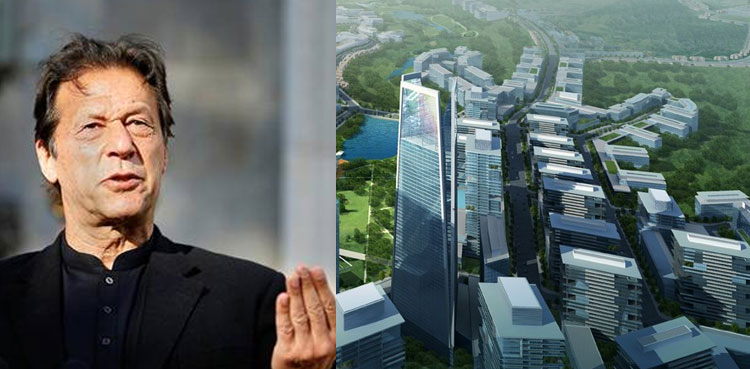
    Prime Minister Imran Khan on Sunday expressed his satisfaction over the progress on special economic zones (SEZ) and approved the setting up one in Karachi.

    The announcement was made by the premier while chairing a meeting to review the progress of CPEC projects and the promotion of investment.

    The meeting was attended by interior minister Shaikh Rasheed Ahmad and federal ministers, including Hammad Azhar and Khusro Bakhtiar.

    He also directed the Board of Investment (BOI) to formulate and present a detailed plan, with the consultation of the business community, for the promotion of foreign investment in specific sectors.

    He also directed the authorities concerned to take immediate steps to remove barriers in issuing long-term visas to foreign investors, especially Chinese investors.


  • SBP forex reserves fall $146m

    SBP forex reserves fall $146m

    The foreign exchange reserves held by the central bank fell 1.06 per cent on a weekly basis, according to data released by the State Bank of Pakistan (SBP) on Thursday.

    On April 2, the foreign currency reserves held by the SBP were recorded at $13,527.2 million, down $146 million compared with $13,673 million in the previous week.

    According to the central bank, the fall came on the back of external debt repayments.

    Overall liquid foreign currency reserves held by the country, including net reserves held by banks other than the SBP, stood at $20,679.4 million. Net reserves held by banks amounted to $7,152.2 million.

  • Foreign inflows in securities show recovery

    Foreign inflows in securities show recovery

    Foreign investments in government debt securities such as T-bills and Pakistan Investment Bonds (PIBs) are gradually increasing amid a surge in the rate of profit on securities, return of stability in rupee-dollar parity and hopes of Islamabad resuming the International Monetary Fund’s (IMF) loan programme soon.

    According to a local media report on Thursday, although the volume of net foreign investment in the securities stood nominal at $17 million in the first 20 days of the ongoing month of March, the number suggests gradually return of foreign investment into Pakistan’s debt market.

    Similarly, the net divestment has reduced to $83 million in the past nine months 9MFY21 as compared to net divestment worth $162 million in 7MFY21.

    The net divestment stood at $266 million in 5MFY21, according to the State Bank of Pakistan (SBP).

    Government securities had witnessed an aggressive investment of over $3.5 billion from July 2019 following the IMF bailout package worth $6 billion, until February 2020 when the Covid-19 pandemic reached Pakistan, delivering a hit to the value of the rupee against the dollar.

    During the March to June period, there was an aggressive outflow of over $3 billion.

    It may be noted here that the rate of profit on three-year PIBs has increased to 9.31 per cent on March 22 compared to 7.53pc at the end of June 2020 in the secondary market. Similarly, the rate of profit on five-year PIB surged to 9.84pc compared to 8.11pc at end of June 2020.

    Similarly, the rate of return on three to 12-month T-bills and other longer tenure PIBs have surged sharply in recent months whereas the profit rates have also surged on the securities in the secondary market despite the real interest rate remaining negative as the central bank wanted to support economic growth during the ongoing pandemic.

  • China, Sri Lanka sign $1.5 billion currency swap deal

    China, Sri Lanka sign $1.5 billion currency swap deal

    COLOMBO: Sri Lanka and China have signed a $1.5 billion currency swap deal, the island nation’s central bank has said, as it struggles with a major foreign exchange crisis and debt repayments.

    Colombo had been negotiating for months to secure credit from China — its largest single source of imports — as the island’s foreign reserves plummet amid the pandemic.

    Chinese influence in the South Asian nation has been growing in recent years, through loans and projects under its vast Belt and Road infrastructure initiative, raising concerns among regional powers and Western nations.

    The Central Bank of Sri Lanka said the three-year swap arrangement for 10 billion yuan with the People’s Bank of China was “with a view to promoting bilateral trade and direct investment for economic development of the two countries”.

    Officials said talks were also under way to secure another $700 million from the China Development Bank.

    Sri Lanka’s economy was already reeling from the deadly 2019 Easter bombings, with the coronavirus epidemic and lockdowns further weighing on growth.

    The economy contracted by a record 3.9 percent last year.

    Foreign reserves fell to $4.5 billion in February from $8.0 billion a year ago, despite Sri Lanka banning the import of luxury goods and vehicles as well as some food commodities.

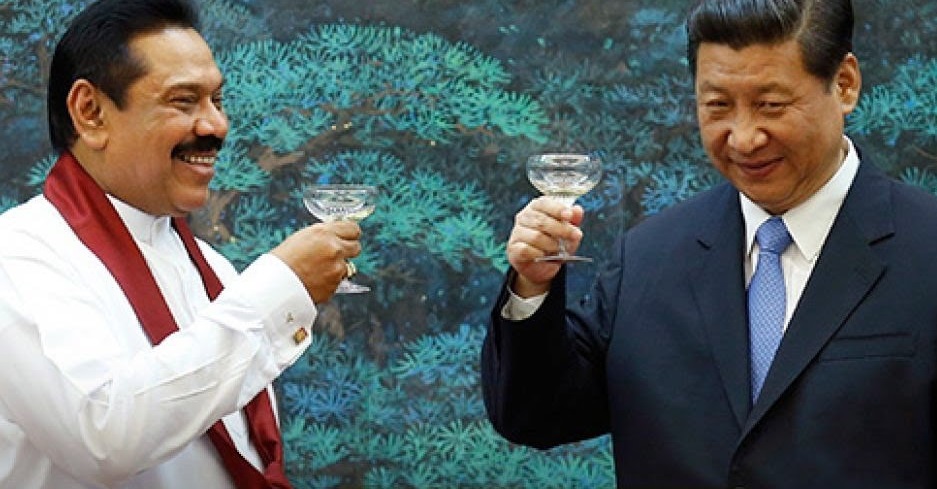
    Under former president Mahinda Rajapaksa between 2005 and 2015, Colombo borrowed billions from China, accumulating a mountain of debt for expensive infrastructure projects.

    Rajapaksa returned to power as prime minister in 2019, after his brother Gotabaya Rajapaksa was elected president.

  • Olive cultivation best investment for forex gains, food security: PM

    Olive cultivation best investment for forex gains, food security: PM

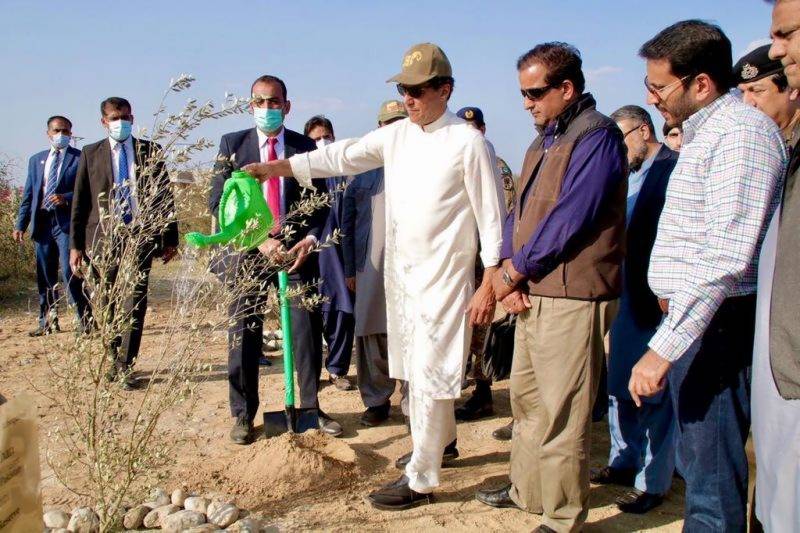
    NOWSHERA: Prime Minister (PM) Imran Khan has said that largescale olive cultivation would prove as the best investment for Pakistan in terms of earning valuable foreign exchange and ensuring food security.

    Addressing at the launch of a countrywide olive cultivation drive starting from Nowshera district on Monday, the prime minister said that Pakistan has more potential than Spain, the leading olive producer in the world, and could explore the possibilities with an effective cultivation strategy.

    “Pakistan has immense potential for olive cultivation, owing to suitable topography and climate. Water scarce areas such as Suleiman Mountains near Waziristan, Balochistan’s plains and Punjab’s diverse terrain offered an environment for low-irrigation olive farming,” he added.

    Khyber Pukhtunkhwa (KP) Governor Shah Farman, Chief Minister (CM) Mehmood Khan, Defence Minister Pervaiz Khattak, Minister for Climate Change Malik Amin Aslam and senior officials were present.

    He said that the plantation could also solve the big challenge of food security as olives produce edible oil of high nutritional value, which could be used to meet local demands besides its export,

    Additionally, he said the project would also generate employment opportunities for the locals, both short and long-term, due to the long life of the plant.

    The prime minister said the project was being carried out under the Ten Billion Tsunami Tree project, while other local fruits would be also be included in the programme later.

    Reminding that Pakistan was among the 10 most vulnerable countries on the verge of experiencing high effects of climate change, the premier said that the country was blessed with 12 climatic zones and a diverse landscape, stressing the need to promote the planation of a variety of crops and fruit.

    “Plantation is the key step to reduce rising pollution levels in big cities of the country if we wish to save future generations from climate change,” he added.

    Speaking about the Miyawaki Japanese technique, recently launched at several sites in Lahore and Islamabad to achieve dense greenery at a faster than usual pace, he directed the Forest Department to use a similar plantation method in Peshawar as the city reports alarming levels of pollution.

    Earlier, PM Imran Khan planted an olive sapling at the model plantation site of Amangarh in Nowshera, where the cultivation of around 7,200 olive plants will be carried out.

    According to official details, the expected economic return of four million grafted olive plants in the sixth year will be around Rs10.8 billion annually, with a total income of Rs54 bn after 10 years.

    The production in the sixth year will be approximately 7.2 million litres with average fruit production per plant at 15 kg.

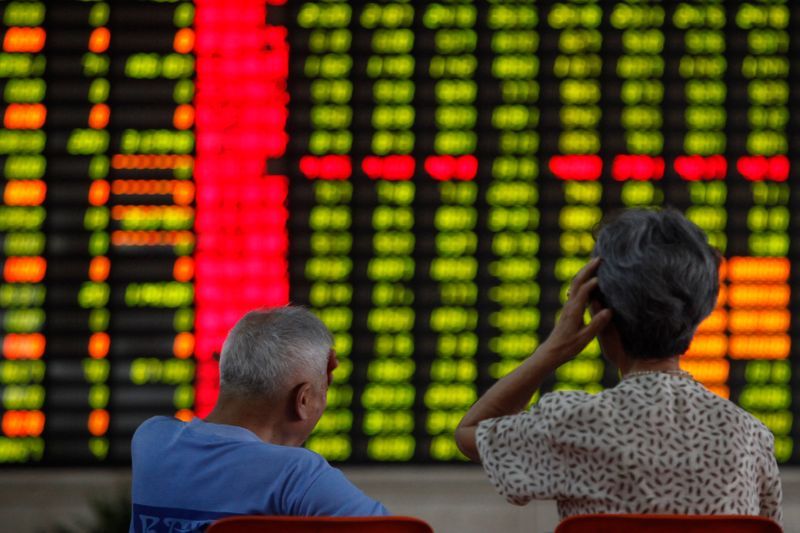
  • Political stability, banks’ dividends may keep PSX green this week

    Political stability, banks’ dividends may keep PSX green this week

    KARACHI: The Pakistan Stock Exchange (PSX) is likely to maintain positive momentum gained on Friday last in the coming sessions this week due to a boost to investors’ confidence after the government managed to crush political instability through its victory in the Senate election for the slots of chairman and deputy chairman.

    However, the rising Covid-19 cases as well as oil prices are factors that could keep market performance in check.

    One of the other positive points for the PSX this week is that the benchmark KSE-100 Index shed 2.049.27 points last week due to political instability, as the market opened at 45,837.35 points on Monday last and closed at 43,788.08 points on Friday last.

    This huge difference of over 2,000 points is despite the fact that the PSX turned bullish on Friday last with the benchmark KSE-100 Index gaining 1,008.32 points. So, there seems to be enough for the investors to turn back to the bourse.

    Again, rupee stability has been witnessed for the last few weeks and the rupee has gained Rs1.94 against the US dollar since February 19. The US dollar was closed at Rs157.14 on Friday last.

    Likewise, the foreign exchange reserves held by the country increased by $24.4 million (+0.12 per cent) to $20.16 billion by the week ended March 05, the State Bank of Pakistan (SBP) said on Thursday.

    Similarly, the foreign remittances continued exceptional performance in the month of February 2021, reaching $2.26 billion, showing a growth of 24.2 per cent as compared to remittances in February 2020, the SBP announced last week.

    The banking sector, which is the largest sector in terms of market capitalisation in the PSX, will be in the limelight this week as the closing period for a dividend payment of many banks will occur this week.

    The benchmark KSE-100 index of the PSX is currently trading at a PER of 6.7x (2021) compared to the Asia Pacific regional average of 17.4x and while offering DY of 7.1 per cent versus 4.5 per cent offered by the region.


  • Rupee to continue upward trend against US dollar

    Rupee to continue upward trend against US dollar

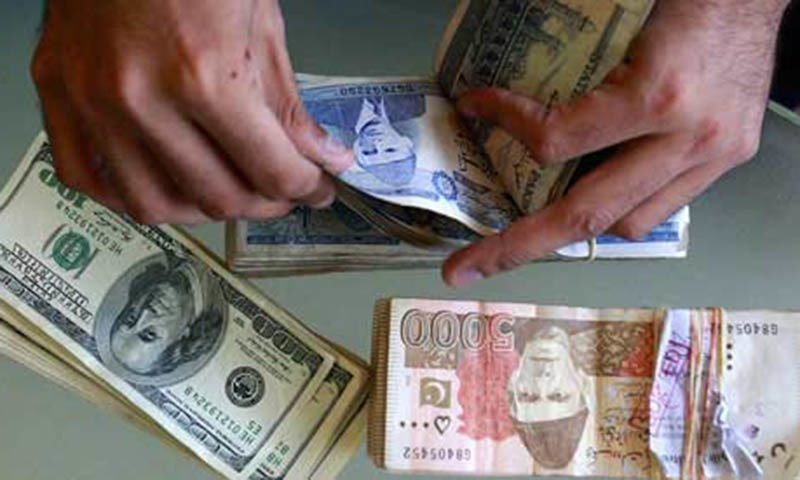
    ISLAMABAD: The Pakistani rupee it will continue its upward trend against the US dollar despite some challenges ahead.

    According to a report published in Khaleej Times, analysts and market experts said the currency will be a major beneficiary of higher GDP growth, rising foreign exchange reserves and consistent remittances inflows of over $2 billion during the first eight months of the current financial year (8MFY21).

    The rupee has so far appreciated 1.7 per cent against the dollar this year and closed at 157.12 on the interbank market on Friday. Against the UAE dirham, it ended slightly up at 42.77 against 43.6 on January 8, reflecting an appreciation of 1.9 per cent.

    “The Pakistani rupee has returned to stability chiefly due to higher remittances, debt relief on account of Covid-19 payment relief plan and economic rebound in the country,” experts said.

    According to the latest data released by the State Bank of Pakistan (SBP), Pakistan’s economy is expected to post 2.5 per cent GDP growth in the current fiscal year ending June 2021 after contracting 0.4 per cent last year as the government’s policy measures start yielding positive results.

    The country registered a 24 per cent year-on-year increase in workers’ remittances to $16.5 billion during the July 2020-January 2021 period, while foreign exchange reserves rose to $20.13 billion during the week ended February 26 from $20.04 billion a week ago, according to the SBP. “The forex reserves held by the central bank increased $70 million to $12.978 billion due to the government’s official inflows. The foreign exchange reserves of commercial banks also increased to $7.155 billion from $7.132 billion,” the SBP said.

    The central bank data also showed that Pakistan’s current account deficit shrank by 55 per cent on a year-on-year basis to $229 million in January from $512 million in the same month last year due to rising exports and higher remittances.

    Pakistan Kuwait Investment Company Research Head, Samiullah Tariq, said the rupee is likely to appreciate against the US dollar on account on positive economic indicators as well as stability in the economy.

    “The main reason for the rupee’s appreciation is stronger inflows under Roshan Digital Accounts and higher remittances during this financial year. Pakistan has also started availing certain lending facilities to pay for petroleum products,” he added.

    To a question, he replied that the resumption of the IMF plan will further strengthen the rupee in the near future. “The IMF plan is expected to firm up repayments of existing loans as well as strengthen forex reserves of the country,” he said.

    About the impact of Financial Action Task Force’s (FATF’s) decision to keep Pakistan on the grey list, Tariq said the currency will not be impacted by this — be it grey or white.

    “I think that we are already seeing significant inflows despite being in the grey list. Supply of the US dollar is getting better with the introduction of new channels for inflows and liberalisation of the forex regime, so those seem more important than FATF at the moment,” he said.

    Pakistan Business Council Vice President for Finance, Muhammad Nafees, said the value of a currency is directly related with the current account position.

    “The Pakistan economy is getting better every day. An increase in remittances from overseas Pakistanis, investment in Roshan Digital Accounts, increase in exports and decrease in import of non-essential items have contributed to the increase in the value of the currency,” he said.


  • Foreign borrowing soars to $6.7b in 7MFY21

    Foreign borrowing soars to $6.7b in 7MFY21

    The government received $6.7 billion in gross foreign loans in the first seven months of the current fiscal year (7MFY21), including a new commercial loan of $500 million from China last month, which helped Islamabad keep its gross official foreign exchange reserves at current levels.

    According to a statement by the Ministry of Economic Affairs, the government during (July-January) period of FY21 obtained $6.7 billion in external loans from multiple financing sources. The gross loans were higher by 6pc or $380 million over the same period of last fiscal year.

    The statement added that out of the $6.7 billion, an amount of $2.7 billion or 41 per cent of the total loans was on account of foreign commercial loans.

    According to a local media report, the government also signed a new agreement worth $1.1 billion on Wednesday with the Islamic Development Bank (IDB). Total inflows in seven months were equal to 54pc of the annual budget estimate of $12.2 billion for the current fiscal year.

    Nearly 87pc of the foreign loans or $5.8 billion were for budget financing, building foreign exchange reserves and commodity financing.

    The country would be paying back those loans after taking new loans as no revenue-generating assets were created by using the loans. Project financing was a mere $897 million or 13pc.

    The economic affairs ministry said that Pakistan repaid $2.7 billion worth of foreign debt in six months, suggesting that net addition to the external public debt in the six-month period was $4 billion.


  • SBP initiates forex digitisation

    SBP initiates forex digitisation

    The State Bank of Pakistan (SBP) has initiated the digitisation of foreign exchange.

    According to a report by a local media outlet, payments to the corporate sector can now be made online, eliminating paperwork in the remittance of foreign currency by bank customers abroad.

    According to a statement by an official of the SBP, the move will benefit the customer in getting timely updates of transactions.

    Earlier in the month, the central bank had notified revisions in chapter 20 of the Foreign Exchange Manual to facilitate startups, fintechs and exports.


  • SBP reserves surge $33m to $13bn

    SBP reserves surge $33m to $13bn

    The foreign exchange reserves held by the State Bank of Pakistan (SBP) increased by $33 million compared with $12,998 million in the previous week with net reserves at $13,031 million, according to the data released by the central bank on Thursday.

    Overall, liquid foreign currency reserves held by the country, including net reserves held by banks other than the SBP, stood at $20,163 billion. Net reserves held by banks amounted to $7,131.9 million.

    The foreign exchange reserves held by the SBP fell by $15 million.

    Meanwhile, the Pakistani rupee continued to strengthen against the United States (US) dollar as it appreciated by 20 paisa against the greenback in the interbank on Thursday.

    According to the SBP, the dollar closed at Rs159.99 against the local currency as compared to yesterday’s closing rate of Rs160.19.

  • Saudi Arabia, UAE retain $2b loans

    Saudi Arabia, UAE retain $2b loans

    Saudi Arabia and the United Arab Emirates (UAE) have not withdrawn loans worth $2 billion that matured last month, signalling that relations between Pakistan and the two key Gulf nations are getting better.

    According to a report by the Express Tribune that quoted a senior government official, Saudi Arabia has retained the remaining $1 billion cash deposit.

    The kingdom had earlier withdrawn $2 billion out of $3 billion loans that it had extended in late 2018 to help Islamabad avoid default on international debt repayments. Pakistan’s foreign minister had said in December that the loans were withdrawn due to a slump in crude oil prices.

    The local media outlet also stated that the UAE has rolled over $1 billion deposit for another year.

    Both the loans matured in the fourth week of January.

    Prime Minister (PM) Imran Khan had obtained $6.2 billion financial support package from Riyadh in October 2018 and another $6.2 billion had been agreed by the UAE. However, the UAE subsequently disbursed only $2 billion.

    The club of the world’s richest economies, G-20, had asked the applicant countries to conclude debt suspension agreements by December 31, 2020, for phase-1 (May to Dec 2020).

    Pakistan has not been making regular debt repayments to Saudi Arabia after the kingdom confirmed in July last year to suspend the bilateral official credit under the G-20 initiative.

    It is not clear whether Saudi Arabia would also revive the $3.2 billion deferred oil financing facility. The kingdom had withdrawn the $3.2 billion deferred oil financing facility in May last year.


  • Azerbaijan keen to open trading houses in Pakistan

    Azerbaijan keen to open trading houses in Pakistan

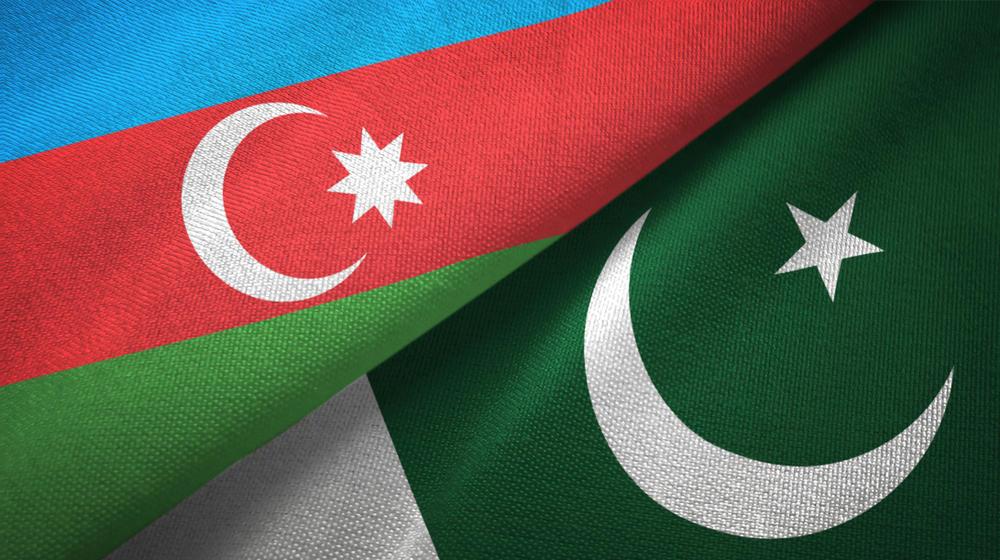
    The Azerbaijan Export and Investment Promotion Foundation (AZPROMO) is exploring the Pakistani market to support the export of Azerbaijani products.

    This was announced by AZPROMO Acting President Yusif Abdullayev during a press conference on Thursday.

    “After a complete analysis of the markets, the country intends to open trading houses in Pakistan as well as Japan,” he stated, recalling that the country’s first trade house was opened in May 2017 in Belarus.

    Currently, seven trading houses of Azerbaijan are operating in foreign countries.